
Blog
Why Is Ammonia Used Around the World?
Ammonia rarely attracts attention, yet it supports food production and many everyday industries. Farmers apply nitrogen fertilizers made from ammonia to help crops grow. Manufacturers also use it in products such as plastics, synthetic fibers, and cleaning agents. In cold-storage facilities, ammonia can serve as an industrial refrigerant. Its uses are broad, but they come with real trade-offs.
The International Energy Agency’s Ammonia Technology Roadmap (2021) estimates that global ammonia production reached about 185 million tonnes in 2020. Around 70% was used to make fertilizers. That scale helps explain why ammonia matters to agricultural supply chains, from fertilizer plants to fields of wheat and rice. It is a basic input, not a magic solution: crop yields also depend on soil, water, weather, and careful nutrient management.
There is a cost. The IEA reports that ammonia production is energy-intensive and responsible for substantial carbon dioxide emissions. Conventional production relies heavily on fossil fuels, so demand alone does not tell the whole story. That story is not simple. Lower-emission production methods are developing, but they require investment, clean energy, and reliable infrastructure. Understanding why ammonia is used worldwide means weighing its practical value against the environmental challenges of producing it.
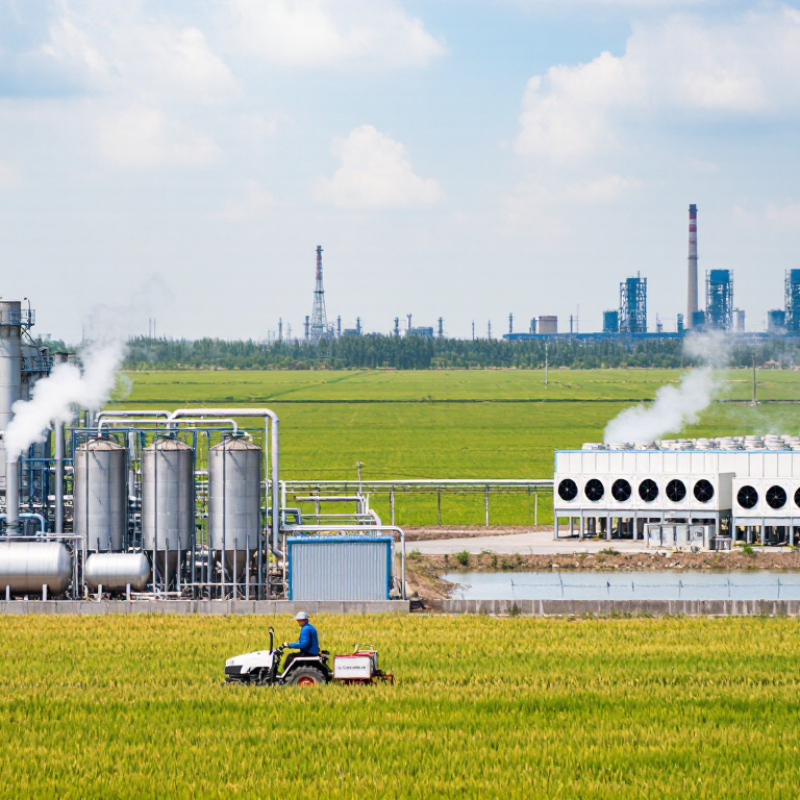
Ammonia’s Properties That Make It Useful
Ammonia is a colorless gas with a sharp, recognizable odor. That smell matters. It can warn of a leak, but it is not a reliable safety test; dangerous exposure may occur before someone can respond. Ammonia also dissolves readily in water, producing an alkaline solution used in some cleaning and industrial processes. Its most important role, however, is supplying nitrogen. Plants need nitrogen to build proteins and grow, so ammonia is a key starting material for many fertilizers. Each molecule carries one nitrogen atom, ready for conversion into forms crops can use.
Ammonia’s physical properties make it useful beyond agriculture. At normal atmospheric pressure, it boils at about minus 33.3 degrees Celsius. When liquid ammonia evaporates, it absorbs heat, making it effective in large refrigeration systems. It can transfer heat efficiently, though performance depends on system design and operating conditions. There is a trade-off. Ammonia is toxic at elevated concentrations and can irritate or damage the eyes, skin, and lungs. Industrial equipment therefore needs careful design, leak detection, and trained operators. The chemistry is elegant; the practical details are less forgiving.
How Ammonia Is Produced and Distributed Worldwide
Ammonia production starts with nitrogen separated from air and hydrogen, commonly made from natural gas. A synthesis process combines them under high pressure and heat, using a catalyst. It starts with air. The hydrogen source often determines much of a plant’s energy use and emissions. Some newer facilities use hydrogen made by splitting water with electricity, but the climate benefit depends on how that electricity is generated.
After production, ammonia is cooled or compressed into a liquid for storage and transport. Large ships carry it between regions, while pipelines, railcars, and road tankers serve shorter routes. At ports and industrial terminals, insulated or pressurized tanks help keep the product contained. Each transfer needs trained operators, leak detection, and suitable protective equipment. Ammonia has a sharp, unmistakable odor, but smell alone is not a dependable safety measure.
Distribution patterns reflect access to energy, ports, pipelines, and customers such as fertilizer plants. A plant near affordable gas may supply distant markets by sea; another may serve farms and factories through regional infrastructure. This network is practical, but not effortless. Shipping and storage add cost, and disruptions can affect supply. Lower-emission production is expanding, though verifying its actual emissions requires looking beyond the factory gate.
Why Is Ammonia Used Around the World?
Global ammonia use by application, approximate share
Ammonia is an essential source of nitrogen for agriculture, so most of it is used to make fertilizers. The remainder serves industrial purposes, including the manufacture of plastics, explosives, and synthetic fibers. Ammonia is produced by combining nitrogen from the air with hydrogen, then distributed around the world by pipeline and ship. Shares are approximate; the International Energy Agency reports that around 70% of ammonia is used to make fertilizers.
Ammonia’s Role in Fertilizers and Food Production
Ammonia’s importance to food begins in the soil. Plants need nitrogen to build leaves, proteins, and grain, but they cannot use nitrogen gas directly from the air. Ammonia supplies nitrogen that can be converted into widely used fertilizers, including urea and ammonium nitrate. The International Energy Agency’s 2021 Ammonia Technology Roadmap estimates that about 70% of ammonia is used to make fertilizers. That is a large share. In a wheat field, properly timed nitrogen can support green growth and fuller grain heads; too little may limit yields.
The scale is substantial. The International Fertilizer Association’s 2023 outlook projected global fertilizer consumption of 192.5 million tonnes of nutrients in 2023/24. This figure covers nitrogen, phosphate, and potash nutrients together, not ammonia alone. Still, it shows the scale of agriculture’s demand. Ammonia-based fertilizers help farmers replenish nitrogen removed when crops are harvested.
Application needs vary with soil, rainfall, crop, and timing. More fertilizer does not automatically mean more food. Some nitrogen can escape into air or water, and field conditions are difficult to predict perfectly. That part deserves more attention. Farmers and advisers use soil tests, crop monitoring, and split applications to better match nitrogen supply with crop uptake, though no method removes every loss.
Industrial, Refrigeration, and Other Uses of Ammonia
Ammonia serves several important industrial roles, with refrigeration among the most visible. In large food-processing plants, cold-storage warehouses, and ice facilities, it circulates through pipes to absorb and release heat. Its strong heat-transfer performance can make systems efficient, especially at a large scale. The equipment needs careful design and regular inspection. A leak is serious. Ammonia can irritate the eyes and lungs, so trained workers use detection systems, ventilation, and clear emergency procedures.
Ammonia is also a key ingredient in fertilizers, helping supply nitrogen that crops need to grow. Chemical manufacturers use it to make products such as plastics, synthetic fibers, and cleaning agents. In some industrial exhaust systems, ammonia helps reduce nitrogen oxide emissions. These applications depend on controlled handling and accurate dosing. Still, efficiency is not the whole story: fertilizer use can contribute to water pollution when nutrients leave fields, and ammonia production requires substantial energy. That trade-off deserves attention. Its benefits are practical, but they do not remove the need for careful management across the supply chain.
Ammonia Safety and Environmental Considerations
Ammonia is widely used in fertilizers and industrial refrigeration, but its usefulness comes with real safety demands. The gas has a sharp, irritating odor. That odor is not a dependable safety alarm: people differ in sensitivity, and exposure can affect their ability to notice it. Concentrated ammonia can damage eyes, skin, and lungs. A small leak may also spread beyond the room where it began.
Facilities that handle ammonia need sound equipment, trained workers, ventilation, and clear emergency plans. Detectors can provide warning, but they do not replace inspections or training. If a release is suspected, people should leave the area and contact trained emergency responders. Unprotected cleanup is not a reasonable shortcut. Details matter here, and procedures should match the equipment and site.
Environmental risks deserve equal attention. Ammonia entering a stream or pond can harm fish and other aquatic life. On farms, excess fertilizer may wash into waterways after heavy rain, adding nitrogen that can encourage harmful algal growth. Some ammonia released to air can also react with other pollutants and form fine particles. Preventing leaks and limiting fertilizer losses can reduce these impacts. Still, controls are not perfect; weather, aging equipment, and human mistakes can complicate even careful plans.
| Dimension | Fact or Data | Global Use, Safety, or Environmental Context |
|---|---|---|
| Chemical composition | Ammonia is NH3; nitrogen makes up about 82% of its mass. | Its high nitrogen content makes ammonia a practical starting material for supplying nitrogen to crops and for manufacturing nitrogen-containing chemicals. |
| Agriculture | Approximately 70% of global ammonia use is associated with fertilizers; the share varies by year and accounting method. | Ammonia is used directly as a fertilizer and as a feedstock for products such as urea and ammonium-based fertilizers. These products help replace nutrients removed from soils by harvesting. |
| Chemical manufacturing | Ammonia is an important feedstock for nitric acid and other nitrogen-based chemicals. | These chemicals are used in a range of industrial processes and products. The exact mix of uses differs among countries and industries. |
| Industrial refrigeration | Anhydrous ammonia is used as a refrigerant, commonly identified as R-717. | It is used in some large refrigeration systems, including food processing and cold storage. Its efficiency and heat-transfer properties are useful, but its toxicity requires strong leak prevention and response measures. |
| Physical properties | Ammonia is a colorless gas with a sharp, pungent odor. It boils at approximately −33.3°C (−28°F) at standard atmospheric pressure. | It can be stored as a pressurized liquid or refrigerated liquid. A release can rapidly produce irritating, toxic vapor; odor should not be treated as a reliable safety warning. |
| Vapor behavior | Ammonia vapor has a relative gas density of about 0.59 compared with air at the same temperature and pressure. | Although ammonia vapor is lighter than air under comparable conditions, a cold release may initially remain near the ground as it mixes and warms. Release behavior depends on temperature, wind, and site conditions. |
| Occupational exposure limits | U.S. OSHA’s permissible exposure limit is 50 ppm as an 8-hour time-weighted average. NIOSH recommends 25 ppm as a time-weighted average and 35 ppm as a short-term exposure limit. | These are workplace reference limits, not guarantees of safety in every situation. Applicable standards vary by jurisdiction, and emergency response requires appropriate training and protective equipment. |
| Immediately dangerous concentration | NIOSH lists 300 ppm as the IDLH concentration for ammonia. | IDLH means “immediately dangerous to life or health.” It is an emergency-planning value, not a permissible routine exposure level. |
| Human health hazards | Ammonia can severely irritate or burn the eyes, skin, and respiratory tract; high concentrations can be life-threatening. | Risk depends on concentration, exposure duration, and route of exposure. Facilities handling ammonia need leak detection, ventilation, emergency procedures, and suitable protective equipment. |
| Aquatic toxicity | Ammonia can be highly toxic to aquatic organisms, with toxicity influenced by concentration, pH, and water temperature. | Uncontrolled releases or runoff can harm fish and other aquatic life. Preventing discharges and managing nitrogen-containing waste are important environmental safeguards. |
| Nutrient pollution | Excess reactive nitrogen from fertilizers can contribute to nutrient enrichment in water and air. | Runoff and atmospheric deposition can contribute to eutrophication, including algal blooms and low-oxygen conditions. Applying fertilizer at appropriate rates and times helps reduce losses. |
| Climate and air quality | Ammonia is not itself a greenhouse gas, but nitrogen fertilizer production and use can be associated with greenhouse-gas emissions, including nitrous oxide. | Ammonia released to air can also react with other pollutants to form fine particulate matter. The overall impacts depend on production methods, fertilizer management, and local atmospheric conditions. |
Reference basis: general information and occupational values from the U.S. Environmental Protection Agency (EPA), the National Institute for Occupational Safety and Health (NIOSH), and the Occupational Safety and Health Administration (OSHA). Exposure limits and regulations differ by country.
