10 Best Wall Mounted Display Racks for Retail Stores
A wall can do more than hold merchandise. In a crowded store, a well-chosen display can bring products into customers’ sightlines, keep small items organized, and free valuable floor space. Yet the right solution depends on what is being sold, how often staff restock it, and whether shoppers need to touch or compare products.
The U.S. Census Bureau reported that e-commerce represented 16.1% of total U.S. retail sales in the fourth quarter of 2024. Physical stores still have a distinct advantage: customers can inspect products in person. Wall-Mounted Display Racks can support that experience when their placement, shelf depth, and load capacity suit the merchandise. The NRF’s 2023 National Retail Security Survey estimated retail shrink at $112.1 billion, or 1.6% of sales, in 2022. That figure does not show that display racks prevent loss. It does remind retailers to consider visibility and staff oversight when choosing fixtures.
Small details matter. A wire rack may suit lightweight accessories, while a sturdy shelf can better support boxed goods. Hooks improve access to hanging products, but can look cluttered when overfilled. This guide compares 10 options for different store layouts, product types, and budgets. It also considers durability, installation, and ease of replenishment. No rack fits every shop. The best choice is often less polished than expected—and more practical.
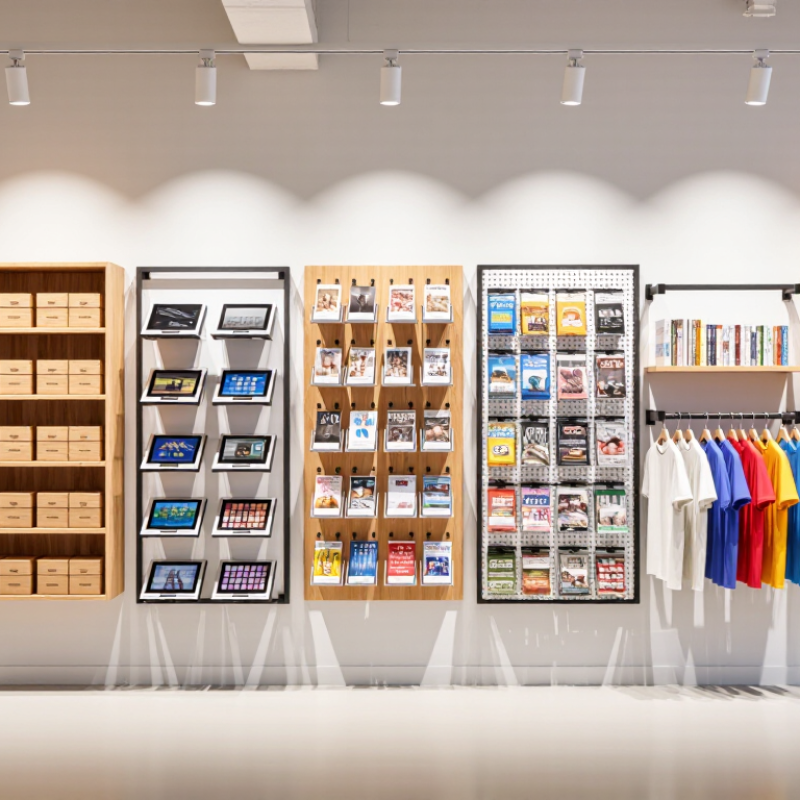
What Wall-Mounted Display Racks Are and How Retailers Use Them
A wall-mounted display rack is a shelving or hanging fixture secured to a store wall, rather than placed on the floor. It can hold packaged goods, folded items, tools, or small accessories, depending on its shelves, hooks, and rated load. Retailers use these racks to make vertical space useful, group related products, and keep floor paths open. A row of hooks beside a fitting area, for example, can present belts near clothing without adding another floor fixture.
Physical stores still matter. The U.S. Census Bureau’s Quarterly Retail E-Commerce Sales report estimated that e-commerce represented 16.1% of total U.S. retail sales in the fourth quarter of 2024. That figure describes the channel mix, not the effect of any display, but it underscores the continuing role of in-person shopping. Good rack placement helps shoppers see merchandise at a glance. Keep frequently handled items within comfortable reach, leave clear space around corners, and check wall construction and fixture load limits before installation. Small details matter. A tidy wall can still fail if labels are hidden or restocking blocks the aisle. Retailers should review the display during busy periods, not only after setup; real shopping behavior can expose awkward reach or crowded sightlines.
Key Rack Types and Features in Retail Display
Wall-mounted display racks should match the product, wall structure, and pace of restocking. Slatwall panels suit changing assortments; hooks and shelves can shift without replacing the whole fixture. Pegboard offers simple, flexible spacing for packaged goods, while gridwall works well for lightweight baskets and accessories. For heavier products, use wall standards with shelves rated for the expected load. The U.S. Census Bureau reported that e-commerce represented 16.1% of total U.S. retail sales in the fourth quarter of 2024. Physical stores still matter, so clear sightlines and reachable products remain practical priorities.
Security and durability deserve equal attention. NRF’s 2023 National Retail Security Survey estimated that retail shrink averaged 1.6% of sales in fiscal 2022, or about $112.1 billion across the sector. That figure does not mean display racks prevent losses, but it supports considering locking hooks or controlled-access shelves for small, higher-value items. Small items need control. Check each fixture’s load rating, anchor type, and spacing before installation; plasterboard and masonry need different fixing methods. Keep frequently handled items around comfortable reach height, and leave room for price labels. One detail is easy to miss: a rack that looks neat when full may become awkward to refill during a busy shift. Test the layout with real products before ordering multiples.
How to Compare the 10 Best Wall-Mounted Display Racks
When comparing ten wall-mounted display racks, use the same checks for each model. Match shelf depth and hook spacing to the products: a rack for boxed goods may waste space when fitted with shallow hooks. Check the stated load capacity, mounting points, and wall requirements, rather than judging strength by appearance. A full row of products can pull differently from one test item. Small details matter.
Compare how easily shelves or hooks move, and whether tools are needed to change the layout. Metal wire racks can keep small items visible, while solid shelves offer steadier support for heavier packages. Neither suits every store.
Measure the wall, aisle clearance, and customer reach before choosing; even a few extra inches can make a tight walkway feel crowded. Look at finish quality, cleanability, and replacement-part availability alongside price.
A low-cost rack may need more adjustment than expected, and advertised capacity alone does not reveal how stable it feels when loaded unevenly. It is easy to overvalue appearance. Record these trade-offs for all ten options, then compare which rack fits the actual merchandise and store layout.
Choosing a Rack for Store Layout, Products, and Customer Access
Choosing a wall-mounted display rack starts with the store layout, not the product catalog. Measure the clear wall space, then note door swings, queue lines, and nearby fixtures. A rack that looks compact on paper may block a narrow aisle once customers gather around it. Leave enough room for people to browse without turning sideways.
Match the rack style to the products. Shelves suit folded goods and small boxes, while hooks keep packaged items visible and easy to compare. Grid panels and adjustable rails can accommodate changing stock, but too many attachments may make the display look cluttered. Small details matter. Check shelf depth, hook spacing, and the height customers can comfortably reach. Heavy items need secure mounting suited to the wall; when the wall type is uncertain, get qualified installation advice rather than guessing.
Customer access also affects sales and upkeep. Place popular items within easy reach, and keep fragile or frequently handled products away from tight corners. Think about restocking, too: staff should be able to refill the rack without shifting neighboring displays. A layout can seem obvious to its designer but confusing to a first-time visitor. Walk the aisle from the entrance and inspect sightlines at different heights. That extra check is easy to skip, and it can reveal awkward gaps, blocked views, or products hidden behind shelf edges.
Accessible Reach Heights for Wall-Mounted Retail Displays
Use these ADA reach-height limits as a guide when positioning frequently selected products on wall-mounted racks. The accessible vertical reach range generally starts at 15 inches; the maximum height is 48 inches for unobstructed forward or side reach, and 44 inches for forward reach over an obstruction 20 to 25 inches deep. Requirements depend on the specific installation and applicable standards.
Source: 2010 ADA Standards for Accessible Design, Sections 308.2 and 308.3. Values shown are maximum reach heights in inches.
Installation, Safety, and Everyday Maintenance of Display Racks
Wall-mounted racks are only as reliable as the wall behind them. Identify whether it is wood framing, concrete, or metal studs before choosing fixings. Use anchors rated for the substrate and the rack’s intended load; drywall alone is not structural support. Follow the stated capacity, and spread heavy items across brackets instead of loading one end. A level and a torque check are simple tools. They can prevent costly surprises. The U.S. Bureau of Labor Statistics reported a 3.3 total-recordable-case rate per 100 full-time workers in retail trade in 2023. This covers all recorded workplace injuries and illnesses, not rack failures. Still, stable fixtures and clear aisles deserve attention.
After installation, check fasteners, anchors, bent arms, cracked welds, and signs of wall movement during routine store inspections. Recheck after restocking or changing the display. Keep heavier products low, within the rack’s depth, and away from aisle edges. Record inspection dates and defects; a quick glance is easy to forget. OSHA materials-handling guidance stresses orderly storage and clear aisles, both useful habits around displays. The weak point may not be the bracket, but an assumption about the wall. Inspection frequency should reflect traffic, load changes, and wall condition. If a rack shifts or shows damage, stop using it until it has been assessed.