
Blog
Top 10 Zinc Die Casting Manufacturers in China
Zinc Die Casting supports detailed, repeatable metal parts for electronics, hardware, automotive components, and consumer products. Thin walls, crisp edges, and smooth surfaces are possible when tooling and process controls are well managed. The material also offers useful strength and dimensional stability for many small components. Details matter.
Choosing a supplier takes more than comparing a quoted unit price. Tooling ownership, alloy traceability, sampling procedures, machine capacity, finishing options, and inspection records can shape both cost and consistency. A polished website is not proof of reliable production. Ask for relevant project examples, sample reports, and clear answers about tolerances and defect handling. Then compare what each factory can document.
This guide introduces ten Zinc Die Casting manufacturers in China and offers a practical starting point for supplier research. Company capabilities can vary by plant, production line, and project scope, so treat any shortlist as a prompt for direct evaluation, not a guarantee. Request current certifications and verify their scope. Check whether the supplier can support your design, expected volume, surface finish, and delivery schedule. Small oversights can become expensive. Even experienced buyers sometimes miss them. A careful review of drawings, samples, and communication helps reveal those gaps before tooling begins. No supplier is right for every part. The best fit is the one whose demonstrated process matches your technical needs and risk tolerance.
Zinc Die Casting in China: Industry Overview and Core Processes
Top 10 Zinc Die Casting Manufacturers in China
Zinc Die Casting in China: Industry Overview and Core Processes
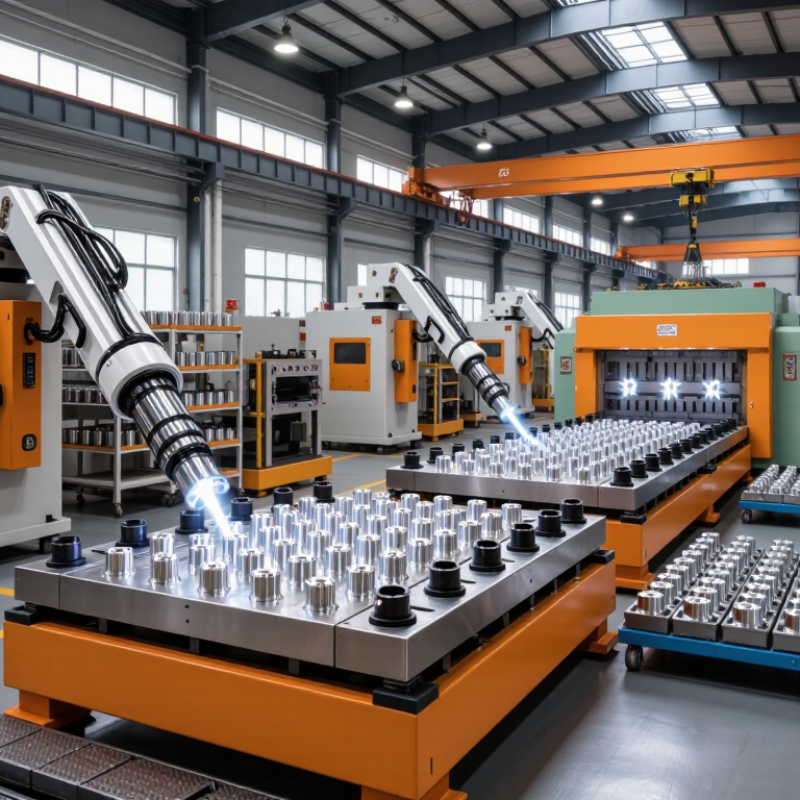
China’s zinc die-casting industry benefits from a substantial domestic metal supply. The USGS Mineral Commodity Summaries 2024 estimated China’s 2023 zinc mine production at about 4 million metric tons, the world’s largest national output. That figure describes mined zinc, not die-casting capacity, but it helps explain the local supply base. Manufacturers commonly use hot-chamber machines, which inject molten zinc alloy into a hardened steel die under pressure. The metal fills fine ribs and small cavities quickly. Cycle times can be short.
After ejection, parts are trimmed and inspected; some receive plating or coating. Process control matters. Poor venting, unstable melt temperature, or worn tooling can leave pores, flash, or incomplete fills. Exact settings depend on part geometry and alloy, so a supplier’s process record is more useful than a broad capacity claim. One detail buyers sometimes overlook: surface finish can hide small defects, so specify inspection criteria early.
Tips: Share a drawing, annual volume, and critical tolerances when requesting a quote. Ask how samples are checked. A clear measurement plan saves time, though it may need revision after the first trial.
The bars show the midpoint of representative operating ranges: molten zinc is commonly processed at about 410–430 °C, while dies are often preheated to about 150–200 °C. Actual settings vary with alloy, component design, and tooling; these figures are not manufacturer-specific.
How to Evaluate China’s Zinc Die Casting Manufacturers
When evaluating China’s zinc die casting manufacturers, look beyond price and polished samples. Ask how each supplier controls alloy composition, melt temperature, injection pressure, and cycle time. Request inspection records for porosity, dimensions, and surface finish. Numbers help.
Grand View Research valued the global die casting market at US$73.49 billion in 2023 and projected 7.1% annual growth through 2030. This covers die casting broadly, not China’s zinc segment alone. Treat it as market context, not proof that any supplier is capable. A capable factory should explain how it maintains repeatability across production runs, not just show one good part.
Check whether the quotation clearly identifies the zinc alloy, tooling scope, expected lead time, and inspection method. Ask for a recent sample and compare critical dimensions with your drawing. If possible, observe a production run or review dated process records. A polished sample can deceive. I would also ask how rejected parts are tracked; this detail is easy to overlook. Confirm that the supplier’s reported tolerances match your actual part requirements, since tighter control can affect cost and yield. Keep the questions specific.
Profiles of 10 Leading Zinc Die Casting Manufacturers in China
These ten profiles highlight different strengths buyers may encounter when comparing Chinese zinc die casting suppliers. One profile focuses on compact components, such as small latches with thin walls. Another handles decorative hardware, where smooth surfaces matter. A third specializes in close-tolerance parts for electrical assemblies. A fourth combines casting with trimming and tapping, reducing handoffs between workshops.
Some manufacturers are better suited to larger production runs, while others may offer more flexibility for changing designs. A fifth profile emphasizes custom tooling and prototype feedback. A sixth is geared toward automotive fittings, where repeatability is important. A seventh offers finishing options, including plating or powder coating. An eighth supports export packaging and batch traceability. A ninth may serve customers needing several related components. The tenth profile centers on inspection, using gauges and sample checks to catch variation. Details matter.
These descriptions are capability profiles, not verified claims about individual factories. Buyers should request current process sheets, material specifications, sample parts, and inspection records. Ask how the supplier controls porosity, flash, and dimensional drift across production batches. A polished sample is useful, but it cannot prove consistent output. No profile is perfect. Smaller suppliers may respond quickly yet have limited capacity; larger operations may provide volume but require clearer forecasts. A factory visit or independent audit can help confirm what documents alone cannot.
Top 10 Zinc Die Casting Manufacturers in China - Profiles of 10 Leading Zinc Die Casting Manufacturers in China
Company names and company-specific claims are omitted. The entries below are anonymized capability profiles based on common zinc die-casting industry practices; they are not verified profiles of individual manufacturers.
| Profile | Typical Capability Focus | Common Zinc Alloy Options | Typical Applications | Services to Confirm |
|---|---|---|---|---|
| Profile 01 | High-volume hot-chamber die casting | Zamak 3; Zamak 5 | Small housings, brackets, knobs, and hardware components | Press capacity, cycle-time capability, process monitoring, and production-volume references |
| Profile 02 | Thin-wall and detailed component production | Zamak 3; Zamak 5 | Decorative fittings, electronic-device parts, and compact enclosures | Minimum wall thickness by part geometry, filling simulation, and sample inspection data |
| Profile 03 | Strength-focused zinc alloy components | Zamak 5; ZA-8 | Mechanical fittings, levers, connectors, and load-bearing hardware | Alloy certification, mechanical-property requirements, and part-specific testing |
| Profile 04 | Precision components with secondary machining | Zamak 3; Zamak 5; ZA-8 | Parts requiring tapped holes, reamed bores, or accurately finished interfaces | Machining tolerances, datum strategy, fixture design, and inspection reports |
| Profile 05 | Decorative finishing and appearance parts | Zamak 3; Zamak 5 | Furniture hardware, consumer-product trim, and visible fittings | Polishing, plating or coating options, appearance standards, and adhesion testing |
| Profile 06 | Integrated casting and finishing supply | Zamak 3; Zamak 5 | Finished hardware and components supplied ready for assembly | Subcontractor controls, finish specifications, traceability, and final inspection scope |
| Profile 07 | Tooling and product-development support | Alloy selected to suit the part and performance requirements | New designs, prototype parts, and products moving toward mass production | Design-for-casting review, mold ownership terms, sampling plan, and tool-maintenance policy |
| Profile 08 | Large or structurally complex zinc components | Zamak 5; ZA-series alloys where suitable for the design | Larger brackets, structural fittings, and multi-feature components | Machine shot capacity, projected area limits, mold layout, and dimensional validation |
| Profile 09 | Quality-system and export-order support | Zamak 3; Zamak 5; other specified zinc alloys | Industrial and consumer components supplied to defined customer requirements | Current certifications, material records, change control, and shipment documentation |
| Profile 10 | Custom parts combining casting and assembly | Alloy selected according to strength, finish, and production needs | Multi-part assemblies, mechanisms, and customer-specific products | Assembly capability, component sourcing, functional testing, and packaging requirements |
Alloy suitability, achievable tolerances, minimum wall thickness, and production capacity depend on the specific part design, tooling, equipment, and agreed quality requirements. Confirm these details directly with each supplier.
Key Capabilities, Materials, and Industries Served
A credible comparison of China’s leading zinc die casting manufacturers should examine more than machine tonnage. Check die-locking force, shot control, cavity design, and whether the supplier can hold thin walls without porosity. USGS Mineral Commodity Summaries 2024 estimated global refined zinc production at 13.7 million tonnes in 2023. That scale makes alloy sourcing and process control practical purchasing questions, not brochure details.
Common choices include Zamak 3 and 5 for detailed, corrosion-resistant components, and ZA-8 where higher strength or wear resistance is needed. The International Zinc Association reports that galvanizing takes roughly 60% of zinc use, while zinc alloys account for about 15%. For casting suppliers, this points to opportunities in automotive hardware, electrical enclosures, appliance parts, and construction fittings. Details matter. Ask for dimensional inspection records, porosity checks, and sample parts from the actual production process.
Finishing capability matters too: look for deburring, machining, plating, and coating coordination, alongside clear alloy traceability. A polished sample can hide production variation. One caveat: published capacity figures rarely show defect rates or delivery consistency, so request recent quality data and inspect representative parts before choosing a supplier.
How to Select a Manufacturer for Your Project
Choosing a zinc die casting manufacturer in China starts with the part, not the price sheet. Share a 3D model, expected annual volume, alloy requirements, and critical dimensions. Ask how the supplier monitors die temperature, injection pressure, and dimensional variation during production. Request parts made with project-specific tooling, not just polished display samples. Small details matter. Inspect thin walls, threads, gate marks, and surface finish under consistent lighting. Clarify whether machining, deburring, coating, and packaging are handled in-house or by qualified partners.
Compare written control plans, not broad promises. Look for alloy inspection records, first-article reports, calibrated gauges, and batch traceability. Ask what happens when a dimension misses tolerance, and who covers rework. A factory visit or live video tour can show die maintenance, storage, and part handling. Still, one visit is only a snapshot. A good sample does not prove stable production. Check lead times against tooling trials, approval rounds, and monthly capacity. The lowest quote may omit secondary operations or rely on unclear assumptions, so review each cost before approving tooling. If answers feel vague now, production may not make them clearer.
