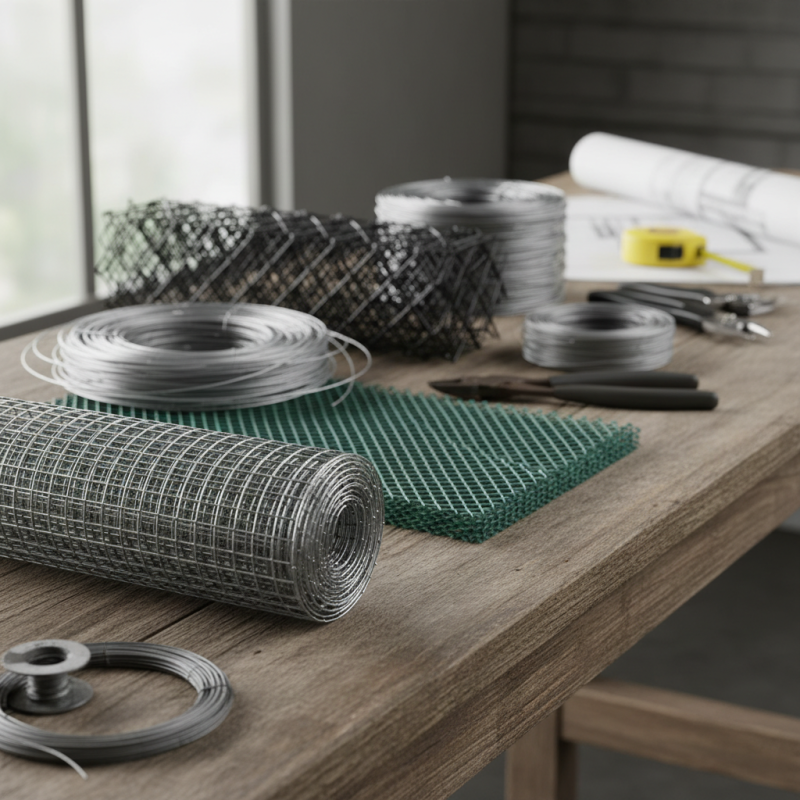
Top 10 Tips for Choosing the Best Welded Wire Mesh?
Choosing the right welded wire mesh can be daunting. This material has various applications, from gardening to construction. Its versatility makes it essential for many projects.
When selecting welded wire mesh, consider your needs. Different sizes and wire gauges will affect strength and durability. Using a too-thin mesh might lead to failures. However, a heavier mesh could be unnecessary for lightweight tasks.
Also, examine the finish of the welded wire mesh. A protective coating can enhance longevity. Rusting can damage the mesh over time, impacting functionality. Take your time to assess options carefully. You want to avoid mistakes in this decision. Remember, the right welded wire mesh can significantly impact your project’s success.
Understanding Welded Wire Mesh: Key Characteristics to Consider
Welded wire mesh is crucial in construction, agriculture, and fencing. Understanding its key characteristics can help in making informed choices. The material is often made from carbon steel or stainless steel, providing strength and durability. Different wire diameters affect the overall strength, with thicker wires offering better resistance against weather and wear.
One vital factor to consider is the spacing between wires. Tighter spacing provides better containment for smaller animals or objects. A recent industry report indicated that mesh with 1-inch spacing is preferable for garden use, while larger spacing suits fencing for livestock. Proper choice ensures longevity and functionality.
When selecting welded wire mesh, think about the coating. Galvanization can increase resistance to rust, extending the lifespan of the product. However, not all coatings are created equal. Inferior coatings can wear out quickly, leading to rust issues sooner than expected. Ensure to check the coating quality. A good investment today can save future costs.
Identifying Your Project Needs and Application Requirements
When selecting welded wire mesh, understanding your project needs and application requirements is essential. Different projects demand various specifications. For instance, if you need structural support, you may require a mesh with higher tensile strength. Reports indicate that the right wire diameter and mesh opening can significantly affect performance. A mesh with a 2-inch opening might suffice for gardening, but not for fencing pets.
Additionally, consider environmental factors. Will the mesh be exposed to moisture? Corrosive environments demand materials with protective coatings. Data from industry studies suggest that over 30% of welded wire mesh failures occur due to inadequate corrosion resistance. Therefore, assess your operating conditions and choose a product designed for them. Sometimes, a project's requirements can shift, leading to unexpected issues. Keep flexibility in mind when making your final decision.
Don't overlook the importance of compliance with industry standards. Mesh specifications often align with safety regulations. However, many products fall short in quality or thickness. A recent inspection report revealed that 15% of wire mesh products did not meet stated specifications. This is a reminder to thoroughly evaluate your chosen supplier and their offerings. Proper research can save time and money in the long run.
Evaluating Material Types and Their Durability Factors
When choosing welded wire mesh, material types play a crucial role in durability. Steel is a common choice. It offers strength and resistance to wear. However, not all steel is created equal. Stainless steel is more resistant to rust. It is ideal for outdoor projects. Yet, it may be more expensive.
Another option is galvanized wire. This type is coated with zinc, offering a protective layer. It resists corrosion for many years. Still, the coating can wear off in harsh conditions. This leads to rust and reduced longevity. Evaluating where the mesh will be used is key.
Plastic mesh is lighter and can be easier to work with. It won’t rust, but its strength is less than metal options. It’s less durable under extreme conditions too. Consider the specific application. What are your needs? Factors like weather and load must influence your choice. Different projects require different solutions, and that can lead to challenging decisions.
Assessing Wire Gauge and Mesh Size for Strength and Stability
When choosing welded wire mesh, assessing wire gauge and mesh size is crucial for strength and stability. Wire gauge determines the thickness of the wires, impacting durability and resilience. A lower gauge number means thicker wire. For example, a 6-gauge wire is more robust than an 8-gauge wire. Industry reports indicate that a 6-gauge mesh can withstand greater tension and deformation, which makes it ideal for heavy-duty applications.
Mesh size also plays a significant role in strength. Smaller openings can provide better containment but may reduce visibility and airflow. For gardening or livestock purposes, typical mesh sizes range from 1x1 inch to 2x2 inches. If you choose a smaller mesh, ensure it aligns with your needs without compromising stability. Always consider your specific application when selecting mesh size and gauge.
Tip: Always consult relevant technical data before making a decision. In some cases, industry standards may recommend specific gauges for certain uses. Evaluate your specific project demands. Don’t just settle for what seems good enough. Reflect on how your choices can affect the overall integrity of your structure or project.
Comparing Price Points and Supplier Reliability for Smart Purchasing
When selecting welded wire mesh, price points and supplier reliability are critical. The wide range of prices can be misleading. A lower price may indicate lesser quality or inadequate service. Researching supplier reliability helps ensure you’re getting the best value for your investment. It's important to read customer reviews. Seek feedback about the mesh's durability and performance. Engaging with past customers can reveal hidden issues.
Maintaining a realistic budget is essential. Avoid the temptation to sacrifice quality for a cheaper option. However, not all expensive products guarantee reliability. Look for samples or product specifications. A good supplier will provide detailed information on the materials used. Transparency is a sign of a trustworthy supplier. Be cautious of those who seem vague about their offerings. Consider ordering small quantities for testing before committing to larger purchases. In this way, you can evaluate the mesh's practicality for your needs.