Top Excavating Equipment for Construction Projects Explained?
When it comes to construction projects, selecting the right excavating equipment is vital. John Smith, a leading expert in construction machinery, once noted, "The right tools can make or break a project." This statement rings true as excavating equipment plays a crucial role in the efficiency and success of any construction site.
In the world of construction, excavators, backhoes, and bulldozers are prominent players. Different projects require specific types of equipment to handle varying soil conditions and sizes. For instance, mini-excavators are valuable in tight spaces, while larger machines tackle substantial tasks. Understanding these nuances can lead to better planning and execution.
However, choosing the right excavating equipment isn't always straightforward. Budget constraints, project scope, and equipment availability can complicate decisions. Some operators may overlook the significance of proper machinery, leading to delays. Therefore, reflecting on equipment choices is essential for optimizing project outcomes.
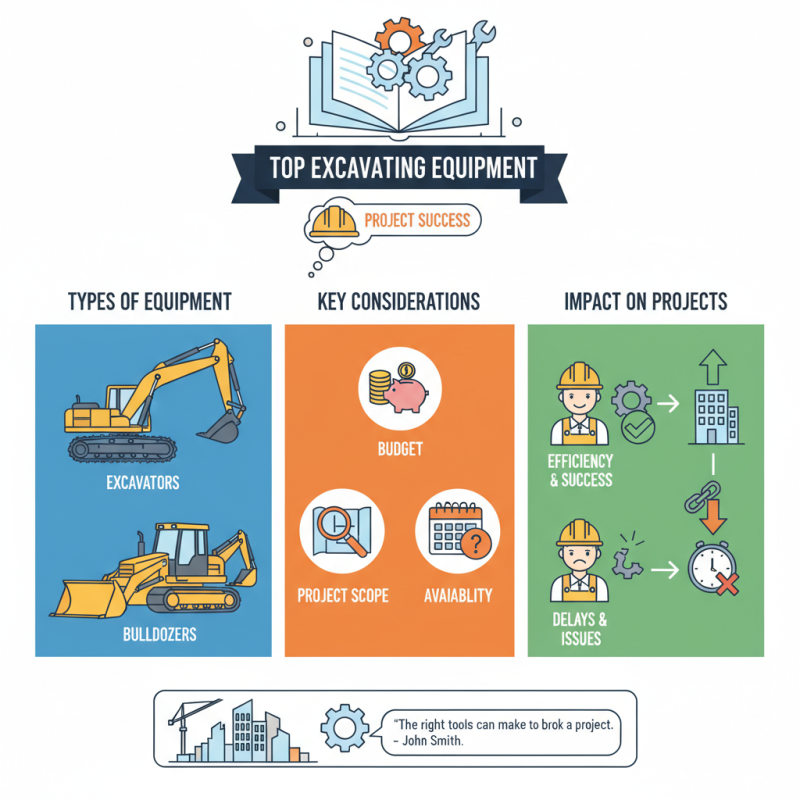
Top Excavating Equipment Overview: Types and Uses in Construction
When it comes to construction projects, selecting the right excavating equipment is crucial. There is a range of equipment tailored for various tasks.
Backhoes are versatile machines ideal for digging and lifting. They excel in small to medium-sized projects, offering both precision and mobility. According to industry reports, backhoes account for about 30% of total excavating equipment used on-site.
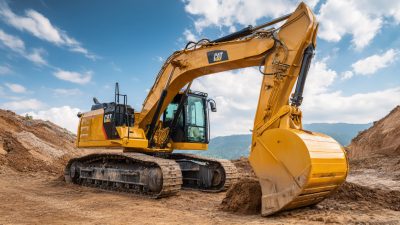
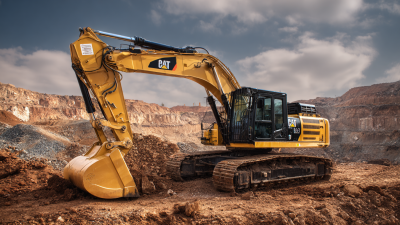
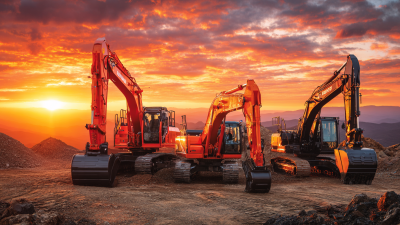
Excavators serve a different purpose. They are larger and designed for heavy lifting and deep digging. Many models have extendable arms, providing additional reach.
Recent data reveals that excavators represent roughly 45% of the excavating equipment market. They are indispensable in large-scale construction, especially for foundation work.
Tips:
Choose equipment that aligns with your project size. Proper training is essential for efficiency and safety. Regular maintenance can significantly extend the lifespan of your machinery. Investing in the right excavating equipment upfront can save money in the long run. Adaptability is key; sometimes, less popular machines may perform better for specific tasks, worth considering.
Importance of Excavating Equipment in Modern Construction Projects
Excavating equipment plays a crucial role in modern construction projects. In fact, nearly 50% of construction delays are attributed to equipment inefficiencies. These machines enable faster project completion and improve safety on job sites. For example, the use of hydraulic excavators can speed up digging by up to 25%, compared to manual methods.
The significance of excavating equipment extends beyond speed. Proper machinery can reduce labor costs by 30%. Additionally, it minimizes the risk of accidents and injuries. According to a recent industry report, projects that utilize advanced excavating tools report fewer on-site incidents. However, reliance on heavy machinery can also lead to overdependence and complacency among workers.
Equipment alone won't guarantee success. Operators must be trained properly. A misused excavator can create hazardous situations. Regular maintenance is key but often neglected, leading to breakdowns that stall progress. Ultimately, understanding the importance of excavating equipment requires a balanced approach. It involves both investing in technology and fostering a skilled workforce.
Key Specifications and Features of Excavators and Loaders
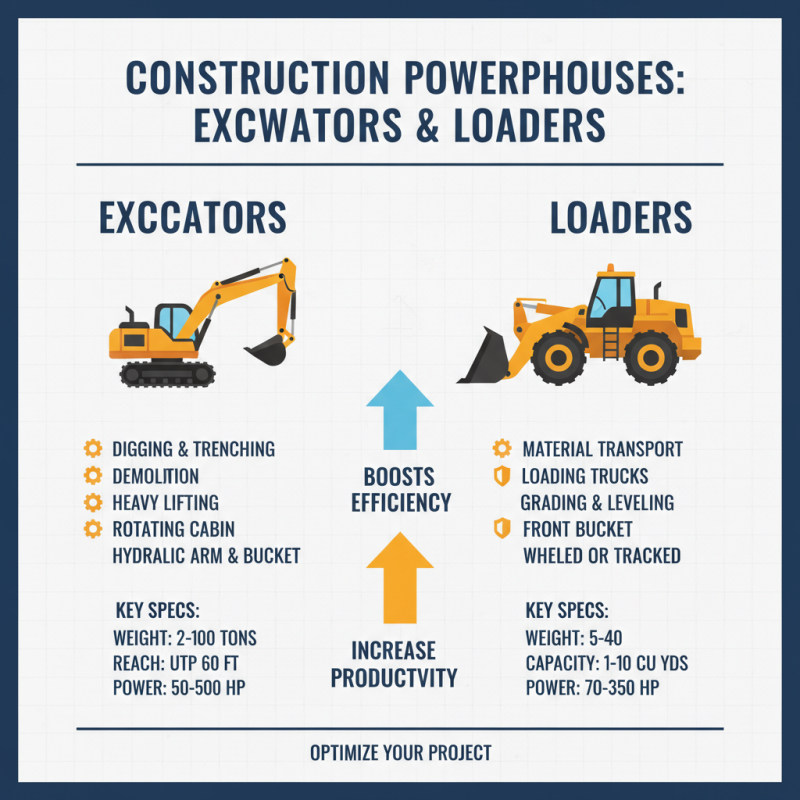
Excavators and loaders are essential machines in construction projects. They enhance efficiency and productivity. Each type of equipment has unique specifications and features. These details cater to various tasks on the job site.
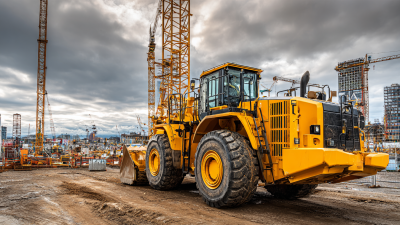
Excavators typically feature a hydraulic arm with a bucket attachment. This allows for digging and lifting heavy materials. The reach and depth are crucial specifications. Many models offer adjustable arms to increase versatility. Loaders, on the other hand, are designed to move materials around. They come with large buckets and can load materials onto trucks. The operating capacity is a key factor in selecting a loader for specific projects.
Different job sites demand different capabilities. For instance, a smaller excavator might struggle in tight spaces. In contrast, larger models can move excessive earth but may not fit urban sites. An inexperienced operator might waste time adjusting to equipment features, causing delays. Understanding these key specifications and features is vital for selecting the right equipment. It ensures projects run smoothly and efficiently.
Trends and Innovations in Excavation Technology for Efficiency
Excavation technology is rapidly evolving to enhance
efficiency on construction sites. Today, advanced machinery features smart sensors that provide
real-time data. Operators can monitor ground conditions and make adjustments instantly. This reduces
delays and increases productivity.
Drones are becoming essential tools for excavation projects. They survey land quickly, providing
precise measurements that guide excavators. This integration
minimizes human error and speeds up the planning phase. However, the reliance on technology can lead
to oversights if operators do not understand the terrain fully.
The move towards automation also introduces challenges. While machines can dig deeper and faster, they
cannot entirely replace human judgment. Workers must remain vigilant. Skills and intuition are crucial in unpredictable
environments. Balancing technology and human insight is vital to achieving optimal results in excavation projects.
Maintenance Best Practices for Longevity of Construction Equipment
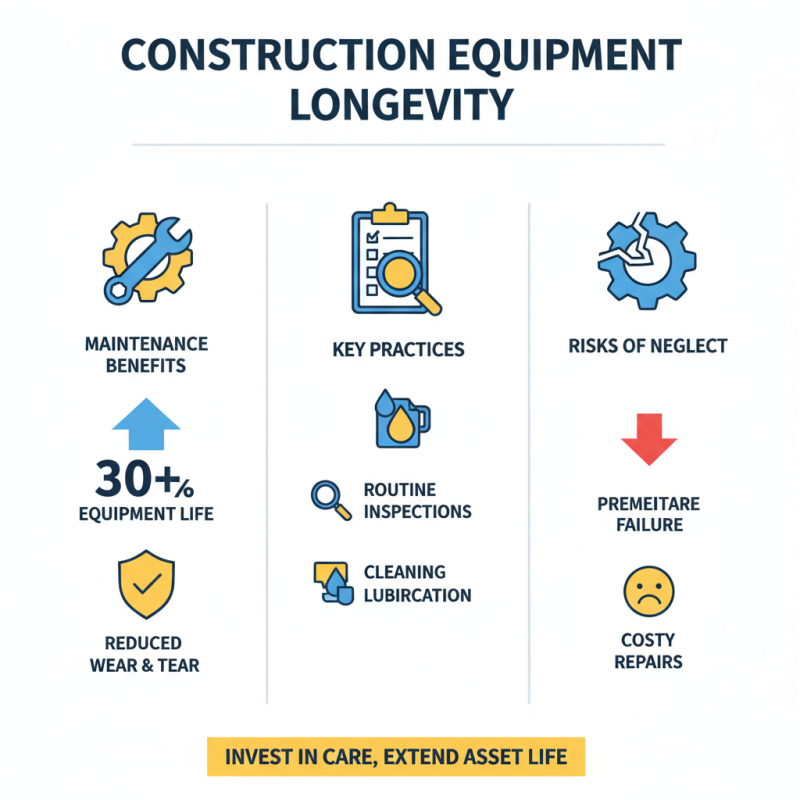
Maintenance is vital for construction equipment longevity. Proper care can extend equipment life by 30% or more. Routine inspections, cleaning, and lubrication all play a role. The machinery can suffer from wear and tear if neglected.
According to industry reports, over 70% of equipment failures stem from poor maintenance practices. Simple tasks like checking fluid levels or replacing filters can prevent costly downtime. Operators should follow a structured maintenance schedule. This can help catch issues early, avoiding major repairs.
However, many companies overlook these practices. Time constraints often lead to shortcuts. Ignoring manufacturers' guidelines is a common mistake that can lead to significant costs. Investing time in maintenance not only extends the life of the equipment but can also enhance safety on-site.