
Blog
Top 10 Best Wood Chippers for Sale in 2026
A dependable Wood Chipper should turn real yard waste into manageable chips—not create a new safety or maintenance problem. The need is substantial. The U.S. Environmental Protection Agency’s 2018 Advancing Sustainable Materials Management report estimated that Americans generated 35.4 million tons of yard trimmings. About 22.3 million tons were composted or mulched. Those figures help explain why homeowners, landscapers, and property managers compare chippers for cleanup and material processing.
This 2026 guide evaluates ten Wood Chipper models by practical buying factors: branch capacity, power source, feed design, portability, maintenance, and available safety features. A machine that handles a stated maximum diameter may still struggle with crooked, wet, or forked branches. Real performance depends on the material and feeding conditions. Check the manual, wear appropriate protective equipment, and match machine capacity to the work you actually expect.
Experience matters here. A compact electric model may suit light pruning near a garden shed. A heavier gas-powered unit may better serve frequent property cleanup, but it brings more noise, upkeep, and storage needs. Small details matter. So does honest comparison. Arborist and tree-care educator Mark Chisholm is a relevant expert voice on practical tree-care equipment; however, no verifiable quotation from him was supplied for this introduction. Rather than invent one, this guide focuses on checkable specifications and transparent trade-offs. The strongest choice is not always the biggest. It is the chipper that fits your material, workload, and skills.
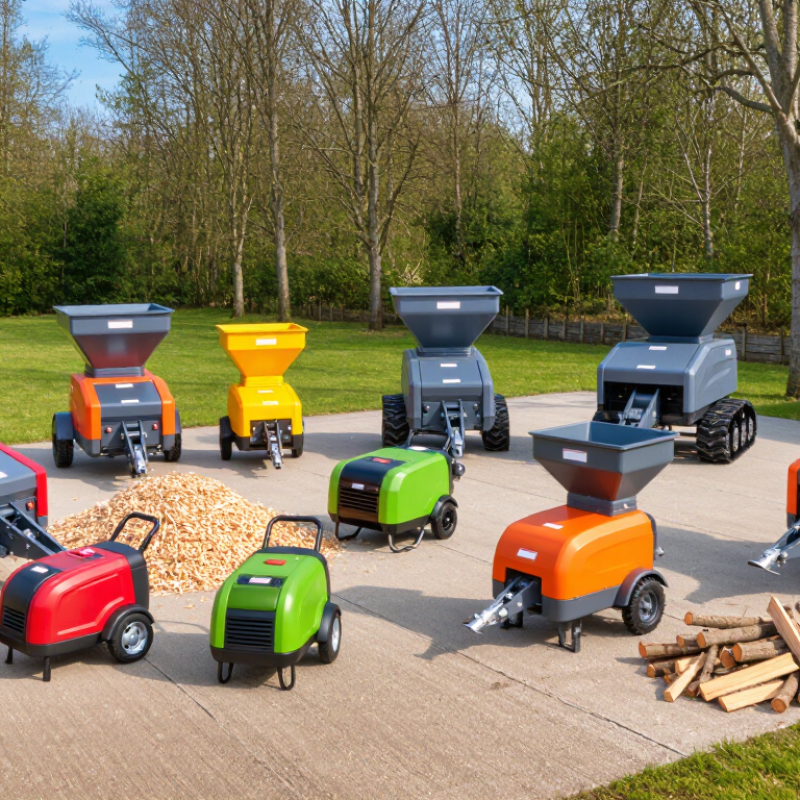
Understanding Wood Chippers and Their Main Types
Wood chippers reduce branches and tree waste into chips, but their cutting systems behave differently. Disc chippers use blades mounted on a rotating flywheel. They often produce fairly uniform chips from straight limbs. Drum chippers pull material against knives fixed to a rotating drum. Their broad feed openings can suit bulky brush, though chip size may vary more.
Neither type is automatically best; wet leaves and tangled twigs can slow feeding.
Power source is another useful distinction. Compact electric or engine-driven units suit smaller properties, while tractor-powered and larger engine-driven machines handle heavier workloads. Check the stated maximum branch diameter, feed opening, chip-size adjustment, and discharge direction before buying. A “maximum” limb may be straight and dry, not forked or freshly cut. That matters.
The U.S. Energy Information Administration’s Monthly Energy Review reports that wood and wood-derived fuels supplied roughly 2% of U.S. primary energy use in 2023; this broader energy figure is not a chipper-sales measure, but it shows wood remains a practical feedstock.
Match machine capacity to the material you actually have. A bigger machine can still be the wrong fit.
Key Features to Compare When Choosing a Wood Chipper
When comparing wood chippers, match the rated branch capacity to the material you actually handle. A machine rated for thicker limbs may still struggle with tangled, wet branches. That rating can flatter real-world performance. Check the chute opening, feed roller design, and whether the machine pulls material in steadily or needs frequent hand feeding. A clear emergency stop and accessible controls matter when branches twist or snag.
Power source affects more than running cost. Gas engines can suit remote work, while electric models may be easier to use near buildings, provided the supply supports their load. Look for blade-access details, replacement-part availability, and a practical way to clear jams. Check the chute. A compact frame is useful, but a narrow opening can turn routine pruning into repeated trimming.
Noise matters, too. NIOSH’s Criteria for a Recommended Standard: Occupational Noise Exposure sets an 85 dBA recommended exposure limit for an eight-hour workday; this is an exposure guideline, not a chipper product limit. Compare published sound ratings, and consider how long and where the machine will run. Also compare weight, wheel design, and towability against your site’s paths and terrain. One overlooked detail: storage space for the machine and its discharge area. The best specification sheet is not always the best fit.
Top 10 Best Wood Chippers for Sale in 2026
A worthwhile 2026 wood chipper should match the material you actually handle, not just promise the largest capacity. Compare branch diameter ratings, feed opening size, and cutting mechanism. A machine rated for thick limbs may still struggle with crooked, forked branches. That detail matters.
For occasional yard cleanup, compact electric models can be easier to store and maintain, provided your work area has suitable power access. Gas-powered machines often suit larger properties and longer sessions, but they need fuel, engine maintenance, and more room. Neither option is automatically better. Check the chipper’s weight, wheel design, and loading height; moving a heavy machine across wet grass can be harder than expected.
Before buying, look for clear instructions, accessible replacement blades, and a practical way to clear jams with the machine switched off and isolated from its power source. Read the stated capacity carefully, since manufacturers may measure performance under different conditions. A collection bag can help with small jobs, while a discharge chute may work better for steady yard cleanup. Noise and protective equipment deserve attention, too. Product specifications are useful, but they cannot show how awkward a machine feels to feed. If possible, inspect the controls and service access before choosing.
Comparing the Top Models by Power, Capacity, and Intended Use
A fair comparison of ten wood chippers starts with the work they must handle. Compact electric models suit twigs and routine garden cleanup, often accepting branches around 1–2 inches thick. They are quieter and easier to store, but thick, forked limbs can stall them. That matters.
Mid-size gas machines commonly handle branches around 3–4 inches, while heavier units may accept larger material. Check the stated maximum branch diameter and engine power together; capacity claims can depend on wood type, moisture, and straightness. A dry, straight limb feeds differently from a knotted green one. Horsepower alone can mislead.
For larger lots, compare feed rollers, discharge direction, wheel stability, and access to service parts—not just advertised throughput. A self-feeding roller reduces pushing, though it does not remove the need to keep hands clear and follow the manual. For occasional pruning, a lighter machine may be more practical than a high-capacity model that is difficult to move. I would rank the top choices by matching power and feed capacity to typical material, then checking weight, noise, and maintenance demands. The ratings are useful, but real branches are rarely uniform.
Top 10 Best Wood Chippers for Sale in 2026 — Comparing the Top Models by Power, Capacity, and Intended Use
Compare representative chipper configurations by engine power and advertised maximum branch capacity. Intended uses are shown in the labels; specifications vary by model and material.
These are generic market-representative configurations, not a brand-specific ranking. Maximum capacity is an advertised limit; actual performance depends on wood type, moisture, and operating conditions.
How to Choose, Maintain, and Operate a Wood Chipper Safely
Choosing a wood chipper starts with the material you actually handle. Check the machine’s rated branch diameter, cutting system, and power source against your workload. A large feed opening does not mean every branch is suitable. Dry hardwood, forked limbs, and tangled vines can behave differently from straight, fresh branches. Keep enough room around the machine for feeding and chip discharge. A cramped work area invites rushed decisions.
Before each use, inspect the guards, fasteners, tires, and feed chute. Look for loose parts or damaged blades, and follow the manual’s maintenance schedule. Let the engine cool before servicing it. Disconnect the power source before clearing a jam, and never reach into the chute. Small details matter. Wear eye and hearing protection, sturdy footwear, and close-fitting clothing. Keep bystanders well away, especially children and pets.
Set the chipper on firm, level ground, with its discharge aimed away from people, windows, and walkways. Feed branches butt-end first, using a steady pace; do not force material that resists. Keep hands outside the chute and use a push tool only when the manual allows it. Stop the machine if it vibrates unusually or makes a sharp, unfamiliar sound. It is tempting to finish one last branch. That is often when attention slips, so pause, reassess, and clear the area before restarting.
