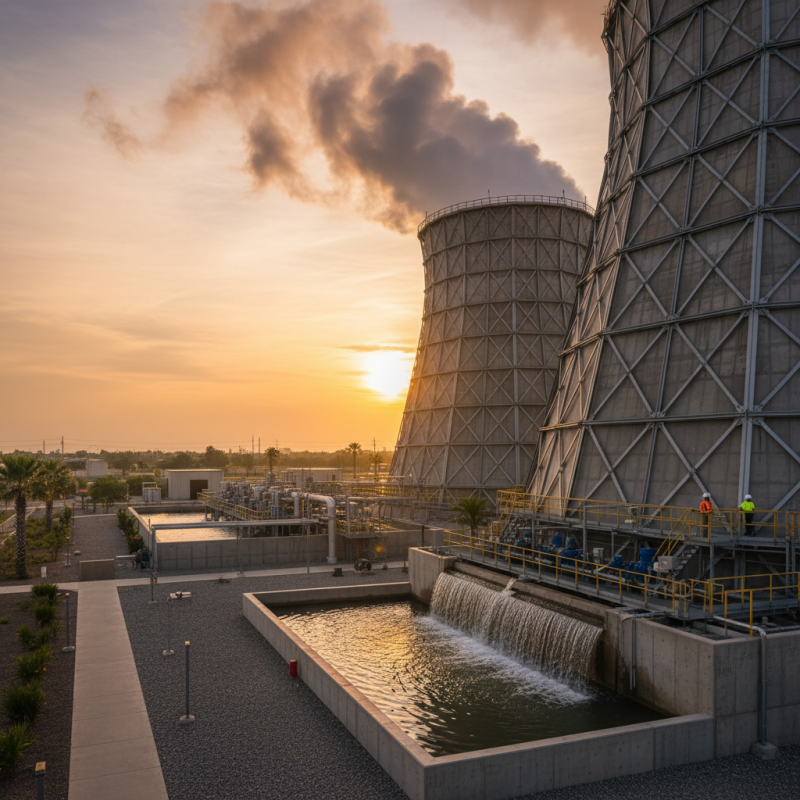
What is a cooling tower and how does it work?
A cooling tower is a vital component in various industrial and commercial processes. It helps to regulate temperature by cooling water used in systems like air conditioning and power generation. Understanding how a cooling tower functions can enhance efficiency and prolong equipment life.
cooling towers operate on simple principles. Warm water from systems circulates to the tower. Here, it disperses heat into the atmosphere. The process involves evaporation, which cools the remaining water. This cycle repeats, ensuring that systems function within optimal temperature ranges.
Despite their effectiveness, there are challenges. Maintenance can be demanding. Debris buildup and water quality issues may compromise performance. A cooling tower requires regular inspections. Neglect can lead to inefficiencies and higher operational costs. Thus, understanding these aspects is crucial for maximizing the benefits of cooling towers.
What is a Cooling Tower?
Cooling towers are essential components in various industrial processes. They help remove heat from hot water, which is generated in cooling systems. Typically, they are found in power plants, HVAC systems, and manufacturing facilities. According to the American Society of Heating, Refrigerating, and Air-Conditioning Engineers (ASHRAE), cooling towers can reduce temperatures by up to 30 degrees Fahrenheit. This impact is vital for system efficiency.
The basic operation of a cooling tower involves the evaporation of water. As warm water enters the tower, it spreads over fill material, increasing surface area for heat transfer. Air is introduced, either naturally or mechanically, facilitating evaporation. This process leads to cooling, as the vaporized water carries away heat. Sadly, inefficiencies can arise due to scaling or biological growth within the tower. Approximately 15% of cooling towers experience issues that hinder their performance, according to industry reports.
Cooling tower designs vary, including open, closed, and hybrid types. Each type has its pros and cons. Open cooling towers allow direct air contact but are prone to water loss through evaporation. Closed-loop systems minimize this loss, yet may require more energy. Data from the U.S. Department of Energy highlight that optimizing cooling tower efficiency can save 20% on energy costs. Weighing options is crucial for achieving reliable and efficient cooling solutions.
Key Components of a Cooling Tower
Cooling towers play a crucial role in many industrial and HVAC systems. To understand them fully, it's vital to look at their key components. The primary part of a cooling tower is the fill material. This helps maximize the surface area for water, enhancing heat exchange. Water flows over the fill, allowing heat to dissipate into the air. It's interesting how a simple design can achieve such efficiency.
Next up is the fan, which aids in air circulation. Fans can vary in size and speed. Their primary role is to pull air through the tower. This airflow is essential for evaporative cooling. The performance of the fan can greatly affect overall efficiency. Sometimes, though, fans can be noisy. This might be a concern in quiet environments.
The sump is another critical component. This is where the cooled water collects before being redistributed. It's often overlooked, but maintaining the sump is vital to prevent contamination. A well-maintained sump ensures the system runs smoothly. It's a tiny element that can cause big problems if neglected. Regular checks are advisable, highlighting the need for ongoing attention in cooling tower maintenance.
How Cooling Towers Operate: The Basic Principles
Cooling towers are critical components in many industrial processes. They help regulate temperature by dissipating excess heat. The basic principle involves the combination of water and air. Hot water from a cooling system flows into the tower. There, it descends through fill media. This increases surface area, promoting evaporation.
As water flows down, air enters from the bottom. The movement of air over the water droplets aids in heat transfer. This evaporative process cools the remaining water. It is estimated that about 1% of the water evaporates in each cycle. However, this can vary based on environmental factors. Data shows that the efficiency of cooling towers can reach up to 90% under optimal conditions. Yet, many towers operate below this level due to design flaws or maintenance issues.
Despite their advantages, cooling towers can have drawbacks. They may contribute to water waste and lead to legionella growth if not properly maintained. According to industry reports, nearly 60% of cooling towers do not meet efficiency standards. This raises concerns about energy use and environmental impact. It emphasizes the need for regular audits and updates to operational protocols.
What is a cooling tower and how does it work? - How Cooling Towers Operate: The Basic Principles
| Component | Function | Material | Maintenance Frequency |
| Fill Media | Maximizes surface area for heat exchange | Plastic or wood | Annual cleaning |
| Drift Eliminators | Minimizes water loss in airflow | PVC or fiberglass | Biannual inspection |
| Fan | Circulates air through the tower | Aluminum or stainless steel | Quarterly check |
| Water Basin | Collects cooled water | Concrete or fiberglass | Annual cleanout |
| Water Distribution System | Distributes hot water evenly | PVC or stainless steel | Annual inspection |
Types of Cooling Towers and Their Applications
Cooling towers are essential for dissipating heat from industrial processes and HVAC systems. They come in several types, each suited for specific applications. The two main categories are natural draft and mechanical draft cooling towers.
Natural draft towers use the buoyancy of warm air to induce cooling. They are often large structures that rely on tall chimneys. These towers are suitable for power plants and large industrial applications where space is abundant.
Mechanical draft towers utilize fans to circulate air. They can be further divided into induced draft and forced draft types. Induced draft towers pull air through, while forced draft towers push air in. Both types are common in commercial buildings and manufacturing facilities.
Tips: When choosing a cooling tower, consider environmental factors. Location can affect efficiency. Regular maintenance is vital to ensure optimal performance. Pay attention to scale and corrosion, which can reduce lifespan.
Despite their advantages, cooling towers can present challenges. They require a water supply, which may not always be feasible. Additionally, they need space for installation and operation. Contamination and drift are also concerns, potentially impacting nearby areas. Always assess the specific needs and limitations of your projects before deciding on a cooling system.
Cooling Tower Types and Applications
Importance of Cooling Towers in Industrial Processes
Cooling towers play a crucial role in industrial processes by removing excess heat from equipment and systems. They are essential in power plants, chemical plants, and manufacturing facilities. By dissipating heat, cooling towers help maintain optimal operating conditions and enhance overall efficiency. According to the U.S. Department of Energy, optimizing cooling systems can result in energy savings of up to 30%.
Tips: Regular maintenance is key. Check for buildup in the cooling system. This can hinder performance and increase energy costs.
Efficiency is critical in an industry's competitive landscape. Poorly designed or inefficient cooling towers can lead to excessive water and energy consumption. A report by the American Society of Heating, Refrigerating and Air-Conditioning Engineers (ASHRAE) indicates that poorly maintained towers can lose up to 20% efficiency. This impacts production and increases operational costs.
Tips: Implement strict monitoring schedules. This practice can prevent unexpected downtime in your processes.
Investing in modern cooling tower technology also empowers industries to adapt to climate changes. It allows facilities to use less water and energy while meeting environmental regulations. As industries strive for sustainability, outdated systems may fall short. This can provoke serious reflections on existing operational strategies.