How to Choose the Right Equipment Parts for Your Needs?
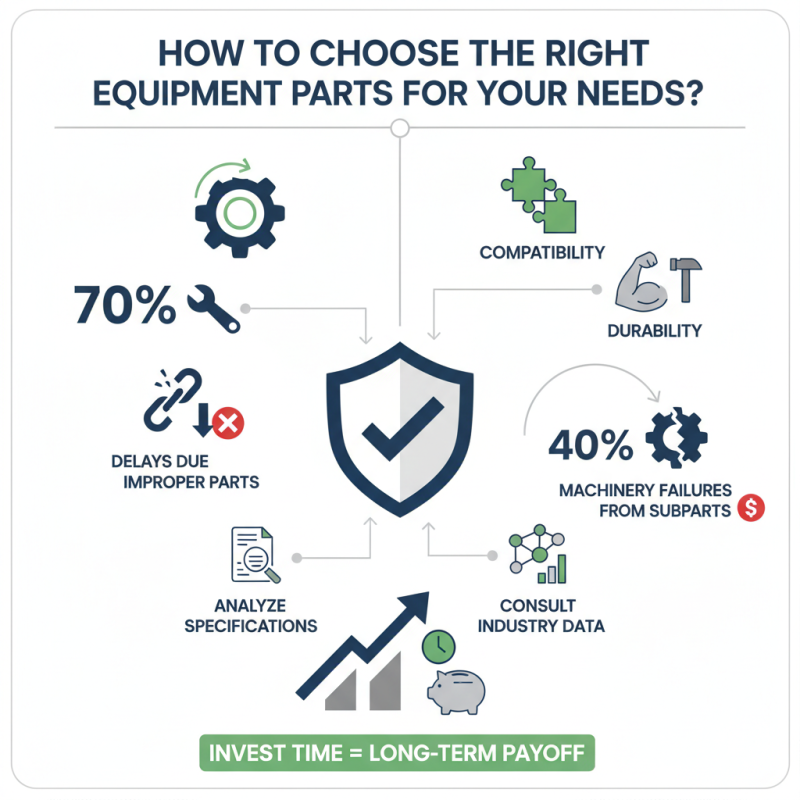
Choosing the right equipment parts is crucial for operational efficiency. According to the Manufacturing Institute, nearly 70% of businesses report delays due to improper parts. This highlights the importance of selecting the correct components.
When evaluating equipment parts, consider compatibility and durability. Research shows that 40% of machinery failures stem from using subpar parts. This can lead to significant costs in repairs and lost production time. The right choice can enhance performance and extend the lifespan of your equipment.
Yet, finding the perfect fit is not always straightforward. Many buyers underestimate the complexity of their needs. It's essential to analyze specifications and consult industry data to ensure optimal decisions. Remember, investing time in research pays off in the long run.
Understanding Your Equipment and Its Requirements
Understanding your equipment is essential for selecting the right parts. Each machine has specific requirements that influence performance. A 2022 report from the Machinery Parts Association indicates that improper parts can reduce efficiency by up to 30%. Knowing the technical specifications of your equipment helps avoid costly mistakes.
For instance, consider the power ratings, sizes, and material types. Misjudging these can lead to part failure. 40% of equipment downtime is attributed to incorrect parts selection. This not only causes delays but also incurs additional costs due to repairs and replacements. Careful evaluation of operational needs can prevent these issues.
Regular maintenance is another critical factor. Many users overlook it, but neglect can lead to more significant issues. Tracking usage trends and wear patterns helps identify the right time for part replacement. An industry survey highlighted that 65% of equipment failures are predictable with proper monitoring. Understanding equipment life cycles allows for proactive decisions, increasing longevity and reliability.
Identifying Key Specifications for Parts Selection
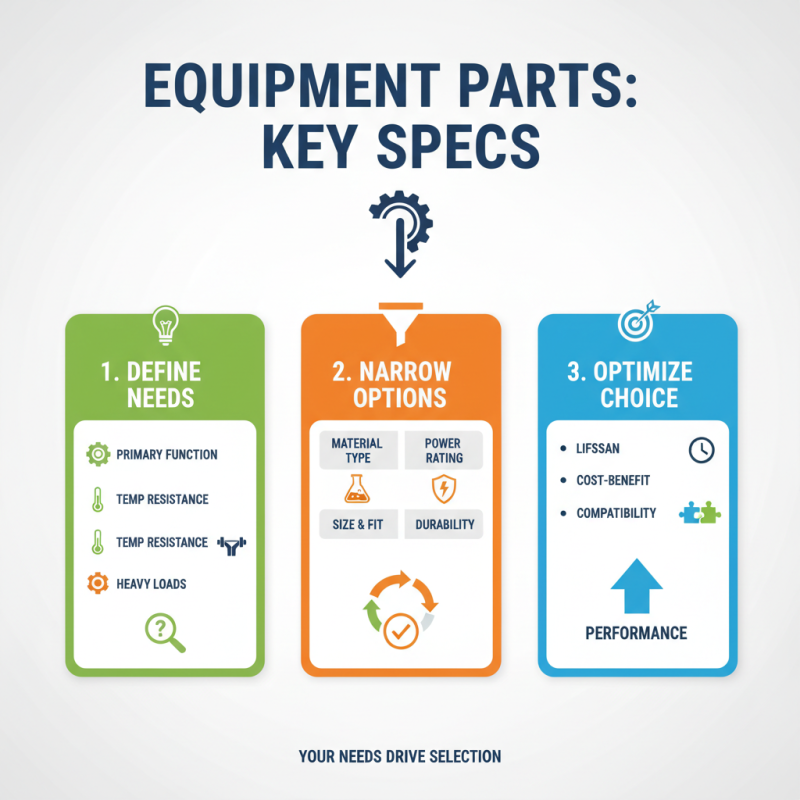
When choosing equipment parts, key specifications play a vital role. Understanding what you need is crucial. Start by identifying the primary function of the part. Does it need to endure high temperatures? Or maybe it will face heavy loads? Knowing this helps narrow down your options.
Next, consider compatibility. Will the part fit with existing equipment? Some specifications, like size and material, can be overlooked. A part might seem suitable but won’t work in practice. Check the dimensions and connection types. Mesh compatibility issues can lead to costly delays.
Additionally, reflect on your long-term needs. A part that works now may not suffice later. Think about future upgrades or changes. It's easy to focus on immediate requirements but take a moment. A hasty decision can lead to repeated purchases. Being thorough in this process can save time and resources down the line.
Assessing Compatibility with Existing Equipment
Assessing compatibility with existing equipment is crucial when selecting parts. You need to ensure the new components work well with what you already have. Misalignment can lead to operational issues or even damage. Always check specifications before making a purchase.
**Tip:** Keep a document of your equipment specifications. It will help during your search for compatible parts.
Consider the material and design of the parts. Different materials can affect durability and performance. For example, a metal component may perform differently compared to plastic. This can lead to unexpected wear or failure over time.
**Tip:** Consult with a technician if you are unsure about compatibility. Their expertise can prevent costly mistakes.
Evaluate existing connections and interfaces. Components must connect seamlessly to function correctly. A slight difference in size can lead to misfits or leaks. Measuring parts before buying can save you from future headaches.
**Tip:** Double-check measurement units. A small conversion error can create issues later on.
Evaluating Quality and Brand Reputation
When selecting equipment parts, quality and brand reputation play crucial roles. A recent industry report indicated that 70% of equipment failures stem from poor-quality components. Low-quality parts can lead to increased maintenance costs and downtime. Businesses often underestimate these risks. Choosing reputable brands may reduce these issues.
Brand reputation is often shaped by customer feedback and durability tests. A 2022 survey found that 85% of users trust recommendations from peers. This suggests that engaging with user reviews is essential. However, relying solely on brand names can be misleading. Some lesser-known brands offer high-quality products but lack visibility.
Reflecting on personal experiences can guide decision-making. Have you faced failures due to overlooked brands? Many professionals do. It's essential to weigh these factors carefully. Quality assurance should include comprehensive evaluations, not just brand loyalty. Understanding specific needs and conducting thorough research will help in making informed choices.
Budget Considerations and Cost-Effectiveness in Purchasing
When considering equipment parts, budget is crucial. A clear understanding of your financial limits can help streamline your options. Start by determining what is essential versus what is a luxury. You might find that some advanced features are not worth the extra cost. Sometimes, sticking to the basics proves more effective.
Cost-effectiveness often means weighing quality against price. High-priced items do not always guarantee better performance. Research and compare different options. Reading user reviews can provide insights into long-term satisfaction. Remember, a slightly cheaper option may outperform a pricier one. Think about maintenance costs too. Sometimes, lower initial investments lead to higher long-term expenses.
It's easy to overspend on equipment that looks impressive. But will it work for you? Being mindful of unnecessary features is essential. Reflect on past purchases; did you use everything you bought? Choosing wisely entails understanding both your needs and your limitations. Avoid adding to your expenses with impulse buys. Focus on practicality and function.