
Blog
How to Choose the Best Polymer Adhesive for Your Needs
Choosing a Polymer Adhesive is less about chasing the strongest label and more about matching the adhesive to the joint. A rigid metal bracket, a flexible plastic housing, and a porous wood panel each place different demands on a bond. Surface energy, temperature, moisture, load direction, and curing time can all change the result. Small details matter.
Adhesion-mechanics researcher Dr. David A. Dillard’s work offers a useful reminder: bond performance depends on the complete bonding system, not adhesive strength alone. The following line is a practical paraphrase, not a verbatim quotation: “Choose for the surfaces and service conditions, not the number on the label.” That distinction can prevent a common mistake: selecting a product from a strength rating while overlooking surface preparation or long-term exposure.
A quick example. A joint beside a warm motor may need different heat resistance than a trim piece used indoors. Some polymers also resist bonding unless cleaned or treated carefully. Read the technical data sheet, check compatibility with both substrates, and test a small sample under realistic conditions. A neat bead is not proof of a durable bond.
There is no universal best choice. Even experienced buyers can miss a variable, such as repeated flexing or a cold installation surface. This guide explains how to compare adhesive chemistries, application methods, and performance requirements, so your selection rests on evidence rather than packaging claims. A little uncertainty is useful; it prompts better questions before the full job begins.
Identify the Materials and Surfaces to Be Bonded
Start by naming both substrates, not just calling them “plastic” or “metal.” ABS, polycarbonate, polyethylene, stainless steel, and painted aluminum present different bonding challenges. Low-surface-energy plastics such as polyethylene can resist wetting, while fingerprints or mold-release residue can weaken adhesion on many materials. Check coatings too. An adhesive may grip the paint but not the underlying panel. That distinction matters. Note whether each surface is rigid, flexible, porous, or coated, and whether it may move during use.
Examine the actual contact area. A smooth glass coupon, a rough cast part, and a curved plastic housing create different contact conditions and stress patterns. Look for scratches, seams, gaps, and edges that could lift under peel forces. Clean each surface with a method compatible with its material; some solvents can damage or craze certain plastics. Let surfaces dry fully. Then check the adhesive’s technical data for substrate compatibility, preparation requirements, temperature range, and cure conditions. Test representative offcuts when possible, especially if coatings or production conditions vary. It is tempting to trust one successful test, but a single sample may hide differences between parts. Measure performance after full cure, not just with an early finger pull.
Define the Bond’s Environmental and Mechanical Requirements
How to Choose the Best Polymer Adhesive for Your Needs
Define the bond’s environmental and mechanical requirements before comparing adhesive types. Note the lowest and highest service temperatures, plus how quickly those changes occur. A joint beside a warm motor faces different conditions from one exposed to outdoor sun and rain. Consider moisture, oils, cleaning agents, and occasional chemical splashes. Be specific: “damp” is less useful than repeated condensation or brief immersion. Small details matter.
Next, identify the forces the bond must withstand. A steady pulling load differs from repeated vibration, impact, or a peeling force at an edge. Also record how much the joined parts flex. A rigid adhesive may suit stable components, while a more flexible bond may better absorb movement. Surface material and preparation matter too; dust, coatings, and release agents can weaken adhesion. Product data sheets help narrow options, but actual results depend on the assembly and curing conditions. Estimates are not always accurate.
Tips: Make a simple service-condition checklist. Test the adhesive on representative materials, using the expected temperature and load where practical. Check the joint after curing. If failure occurs, note where it starts; that detail can guide a better choice.
How to Choose the Best Polymer Adhesive for Your Needs — Define the Bond’s Environmental and Mechanical Requirements
Temperature is one environmental requirement to check first. These approximate ranges are general screening guidance, not guaranteed limits: actual performance depends on the formulation, substrate, joint design, and exposure conditions. Also assess moisture and chemical exposure, vibration, and whether the joint will face tension, shear, or peel. Confirm all requirements against the adhesive’s technical data sheet.
Compare Polymer Adhesive Types and Formulations
Choosing a polymer adhesive starts with matching its chemistry to the joint. Water-based acrylics suit porous materials and many indoor applications, but drying time shifts with humidity and airflow. Hot-melt thermoplastics set quickly and work well in high-speed assembly. Fast set is tempting. Heat can soften them later. Epoxies often bond rigid metals and composites, while polyurethane formulations accommodate movement better. Pressure-sensitive adhesives offer instant tack, but sustained structural loads may exceed their design.
Formulation matters as much as polymer type. Check viscosity for bead control, solids for coverage, and open time against your assembly speed. Grand View Research’s 2023 global adhesives market report estimated that water-based adhesives held 37.4% of market revenue. That figure shows broad use, not universal suitability. For a metal bracket, compare cured strength and temperature performance; for a wood panel, check moisture resistance and surface fit. Test on the actual substrate, with realistic gaps and cure conditions. One lab coupon is not enough. ASTM D1002 provides a standard method for measuring adhesive lap-shear strength on metal specimens, but it cannot predict every field condition. Recheck the choice after aging or exposure testing; the first result can look reassuring and still mislead.
Check Application Methods, Curing Conditions, and Safety Needs
Choosing a polymer adhesive starts with how you can apply it. A squeeze tube may suit a narrow repair, while a cartridge and mixing nozzle can deliver a controlled bead across a wider joint. Check whether the adhesive is one-part or requires mixing, and confirm the working time leaves enough room for assembly. Short working time can catch people out. Clean, dry surfaces usually help, but some plastics need specific preparation. Follow the product’s technical data sheet rather than guessing from appearance. A small test on scrap material can reveal poor spreading or unexpected surface damage before the main job.
Curing conditions matter just as much as application. Temperature, humidity, bond thickness, and airflow can all affect cure speed and final strength. “Touch-dry” does not necessarily mean fully cured; allow the stated time before loading the joint. If conditions at the worksite fall outside the recommended range, pause and check with the manufacturer’s guidance. Read the safety data sheet before opening the container. Wear suitable gloves and eye protection, and provide ventilation when fumes may build up. Keep the adhesive away from food and children. It is easy to focus on bond strength and overlook cleanup, but uncured residue can be difficult to remove safely.
Test Compatibility and Bond Performance Before Selection
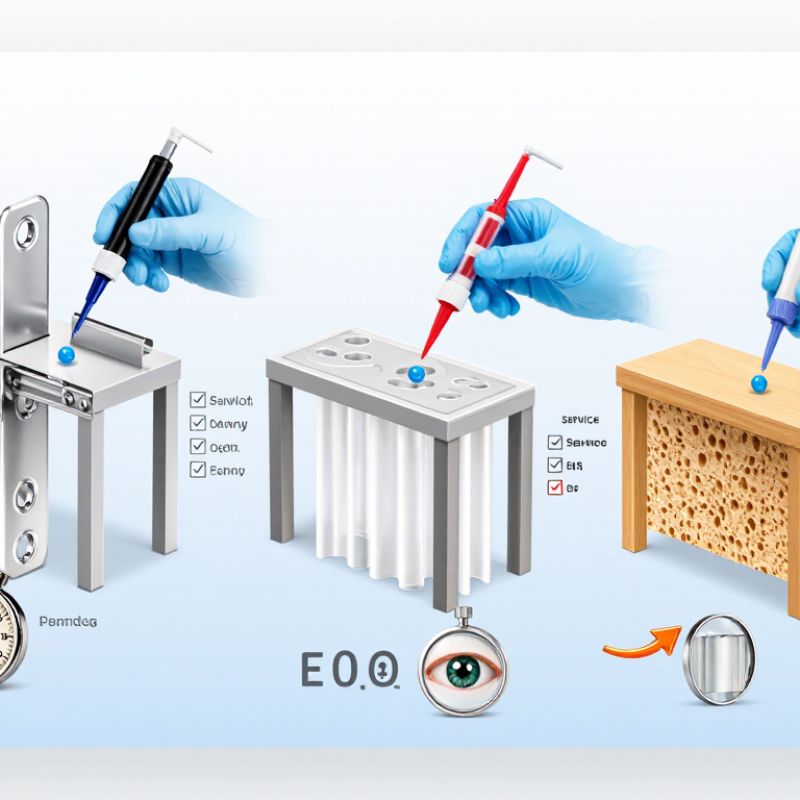
Test compatibility on the exact materials, not just similar-looking samples. Plastics can differ in surface energy, additives, and coatings, while metals may carry oil or oxide. Cut small coupons from the parts you plan to bond. Clean them using a method suitable for each substrate, then let them dry fully. Keep notes. Record the adhesive amount, working time, temperature, and cure time. A bond that looks firm after ten minutes may still be weak inside.
Compare performance under realistic conditions. Make several samples, not one, and test them after the full recommended cure. Apply a steady pull or shear load, and note whether failure occurs within the adhesive or at the surface. If the joint will face heat, moisture, or vibration, expose samples to those conditions before testing again. A simple workshop trial cannot reproduce every service environment; that limitation matters. I have seen a tidy bench result disappoint once parts warmed and flexed. Change one factor at a time, such as surface preparation or bond thickness, so the result teaches you something. If the outcome varies widely, repeat the test before selecting an adhesive.
How to Choose the Best Polymer Adhesive for Your Needs — Test Compatibility and Bond Performance Before Selection
| Polymer Substrate | Adhesive Families to Evaluate | Typical Compatibility Considerations | Bond Performance to Assess | Surface Preparation | Recommended Screening Tests |
|---|---|---|---|---|---|
| Polyethylene (PE) and polypropylene (PP) | Polyolefin-specific acrylics; selected cyanoacrylates or other adhesives used with an approved primer | These plastics have low surface energy, so many general-purpose adhesives wet and bond poorly. Adhesive and primer compatibility must be checked for the specific grade. | Initial adhesion, peel or lap-shear strength, impact resistance, and retention after heat, humidity, or chemical exposure | Clean with a substrate-compatible method. Plasma, corona, flame treatment, or a primer may improve bonding; confirm that treatment does not deform or damage the part. | Compare untreated and treated specimens; perform lap-shear and peel tests, then repeat after environmental conditioning. |
| Polyvinyl chloride (PVC) | Solvent cements formulated for the PVC type; compatible acrylic, polyurethane, or epoxy systems | Rigid and flexible PVC behave differently. Plasticizers in flexible PVC can migrate and weaken or soften some adhesive bonds over time. | Bond strength, flexibility, resistance to plasticizer migration, and performance after aging | Remove contamination with a method approved for the PVC formulation. Avoid solvents that cause swelling, crazing, or surface damage. | Test the actual rigid or flexible grade; inspect for cracking or softening and measure peel or shear strength before and after aging. |
| Acrylonitrile butadiene styrene (ABS) | Structural acrylics, epoxies, selected cyanoacrylates, and compatible solvent-based systems | ABS is often bondable, but solvent exposure and residual stress can cause crazing or cracking. Formulation and molded-part condition matter. | Shear and peel strength, impact performance, and resistance to stress cracking | Clean and dry the surface. Use abrasion only when appropriate, and avoid aggressive solvents unless compatibility has been verified. | Check for visible crazing on stressed parts; conduct lap-shear or peel tests and inspect after thermal and chemical exposure. |
| Polycarbonate (PC) | Low-stress acrylics, selected two-part polyurethanes, and compatible epoxies | Some solvents, primers, and adhesive cure stresses can cause environmental stress cracking. Optical clarity may also be affected by bond-line haze. | Adhesion, optical appearance where relevant, impact strength, and resistance to cracking during aging | Use a non-damaging cleaning method and avoid unverified solvents. Keep the part free of molded-in or assembly stress where practical. | Test under representative part stress; inspect for crazing and discoloration, and measure bond strength after temperature and humidity conditioning. |
| Polyamide (nylon, PA) | Epoxies, polyurethanes, and structural acrylics formulated for engineering plastics | Nylon absorbs moisture, which can change its dimensions and mechanical behavior. Moisture at the surface may also affect adhesive cure or adhesion. | Shear and peel strength, dimensional stability, and strength after moisture conditioning | Clean the surface and control moisture consistently. Follow the adhesive supplier’s guidance on drying and assembly conditions. | Condition specimens at both dry and humid states; test lap-shear or peel strength and monitor bond-line changes. |
| Polyethylene terephthalate (PET) and polyester films | Pressure-sensitive acrylics; selected polyurethane, epoxy, or heat-activated adhesive systems | Film coatings, additives, and surface treatments can strongly affect adhesion. Flexible films require an adhesive that tolerates bending and peel loads. | Peel strength, flexibility, clarity if needed, and resistance to humidity or temperature cycling | Keep the film clean and avoid scratching or stretching it. Verify whether the film is untreated, coated, or surface-treated. | Use peel tests on the actual film construction; assess appearance and adhesion after flexing and environmental conditioning. |
| Polystyrene (PS) and high-impact polystyrene (HIPS) | Compatible solvent cements, acrylics, and selected cyanoacrylates | Solvents can rapidly attack or distort polystyrene. HIPS formulations may respond differently from general-purpose polystyrene. | Bond strength, dimensional accuracy, appearance, and resistance to cracking | Use gentle cleaning and verify solvent compatibility on a noncritical sample. Avoid excessive adhesive application. | Check for warping, crazing, and surface damage; perform shear or peel tests after the bond has fully cured. |
| Thermoset composites and fiber-reinforced polymers | Epoxies, structural acrylics, and polyurethanes selected for the resin system and service conditions | Surface resin, release agents, fiber exposure, and cure state influence bonding. Adhesives should be selected for the composite matrix and load direction. | Lap-shear strength, fatigue, impact, temperature resistance, and failure mode (adhesive, cohesive, or substrate) | Remove release-agent residue; abrade or otherwise prepare the surface using a validated process, then clean away dust. | Test representative laminate and joint geometry; record failure mode and repeat after fatigue or environmental conditioning. |
Selection note: These are general screening guidelines, not guaranteed compatibility ratings. Confirm results using the exact polymer grade, surface finish, adhesive formulation, joint design, cure conditions, and intended service environment.
