How to Choose the Best Collapsible Gazebo for Your Needs
A Collapsible Gazebo can turn a sunny patio, market stall, or campsite into a shaded, usable space. The best choice is not always the largest canopy or the lowest-priced model. Setup, fit, and weather protection matter just as much. A gazebo that looks sturdy in a product photo may feel cumbersome when its frame, canopy, and carry bag are loaded into a car. That detail gets missed.
Start by measuring the area and checking how many people or pieces of furniture need shelter. Compare the open dimensions with the packed size and total weight. Then review the frame material, canopy fabric, connectors, and the manufacturer’s guidance for wind and rain. Terms like “water-resistant” and “waterproof” are not interchangeable, so check the product specifications rather than relying on a short label. For regular outdoor use, suitable anchors and clear setup instructions are practical essentials. Even a well-made frame needs proper securing.
This guide explores how to match a gazebo to its intended setting, how to weigh portability against stability, and which features are worth the extra cost. Think about how often you will assemble it, who will carry it, and where it will be stored between outings. A quick setup can be appealing, but it does not guarantee easy handling for every person. There are trade-offs, and no single model fits every plan. Consider your usual conditions, not just the ideal sunny afternoon, and verify key details before buying.
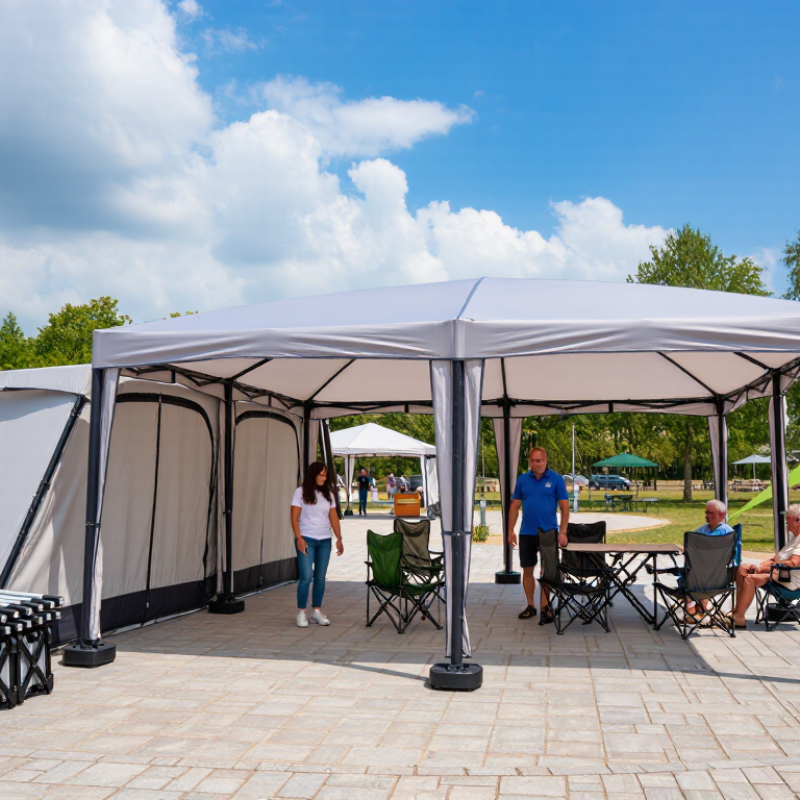
Identify Your Intended Uses and Site Requirements
Start with what the gazebo must do on an ordinary day. A family gathering needs room for chairs and a clear walkway, while a market table may need extra side coverage for stock. Measure the space with a tape, then mark the planned footprint using string or chalk. Check the height, too: low branches, balcony edges, or overhead lights can make a seemingly roomy spot awkward. Count the people and equipment you expect to shelter. A little extra space helps.
Now assess the site itself. Grass, paving, and compacted soil each affect stability and anchoring options. Look for slopes, puddles after rain, exposed corners, and nearby walls that may funnel gusts. Wind matters. A collapsible frame is not automatically suitable for every forecast, so check the maker’s stated limits and use only compatible weights or anchors. Think about access as well: can the packed gazebo pass through a gate, and is there dry storage nearby? If setup will be repeated, practice opening and closing it before an event. I once underestimated the space needed for the folded frame; it took up more room than expected. That part deserves a second measurement.
Compare Frame Designs, Canopy Fabrics, and Construction Quality
A collapsible gazebo’s frame determines how easily it opens and how steady it feels. Steel frames are often sturdy, but they can be heavy to carry. Aluminum is lighter and resists rust, though thin tubing may flex under pressure. Compare leg shapes, cross-braces, and locking joints; these affect stability and setup. Check that locks engage firmly without awkward force. Small details matter.
Canopy fabric deserves equal attention. Polyester is common, but fabric weight and coating can vary widely. Look for clear information about water resistance and UV protection, plus reinforced seams where the canopy meets the frame. A light-colored roof can feel cooler in direct sun, while darker fabric may show less dirt. No fabric is carefree. Wind-driven rain can still seep through seams, so consider the weather you actually expect.
Construction quality shows in the parts you touch. Inspect stitching, corner reinforcements, foot plates, and the fit of each telescoping leg. A gazebo that feels solid in a showroom may still be cumbersome to pack, so check its folded size and carry weight. It is easy to focus on a thick frame and overlook a weak joint. I would compare the whole structure, not just one impressive specification.
Select a Size and Weather Rating for Your Conditions
Choose a canopy by the space you need to use, not just the number of people it claims to fit. A 10-by-10-foot gazebo covers 100 square feet, but tables, chairs, and doorways quickly eat into that area. Sketch the layout, then leave room to walk around it. Measure the ground, too: a patio edge or sloping lawn can make a seemingly perfect size awkward. Measure twice. A neat fit can be a bad fit.
Weather ratings need careful reading. The U.S. National Weather Service defines severe-thunderstorm winds as 58 mph or higher; that is a hazard threshold, not a safe operating rating for a gazebo. NOAA’s Atlas 14 precipitation-frequency reports provide location-specific rainfall estimates by storm duration and likelihood. Use local data to consider runoff and pooling, but don’t treat it as a roof-load guarantee. Check what wind speed the shelter was tested for, and whether that rating assumes particular anchors or ground conditions. A rating without test details is hard to compare. Even a sturdy frame needs suitable anchoring, and taking it down before strong winds is often the more sensible choice.
How to Choose the Best Collapsible Gazebo for Your Needs - Select a Size and Weather Rating for Your Conditions
| Canopy Size | Approximate Footprint | Typical Uses | Approximate Standing Capacity | Weather and Setup Considerations |
| 8 ft × 8 ft | 64 sq ft | Small patios, market stalls, or shade for a compact seating area | About 8–10 people | Easy to fit into smaller spaces. Secure every leg; avoid use in strong or gusty winds. |
| 10 ft × 10 ft | 100 sq ft | Backyard gatherings, outdoor dining, and general-purpose shade | About 12–16 people | A common versatile size. Check the frame and canopy specifications for rain and wind guidance. |
| 10 ft × 15 ft | 150 sq ft | Long tables, food service, or additional covered seating | About 18–24 people | Needs more clear ground space and secure anchoring. A larger canopy can catch more wind. |
| 10 ft × 20 ft | 200 sq ft | Larger events, multiple tables, or extended market displays | About 24–32 people | Plan for a level setup area and anchoring at every leg. Follow the maker’s instructions for adverse weather. |
Standing-capacity figures are rough planning estimates, not occupancy limits. Tables, chairs, equipment, and required walkways reduce usable space. Confirm the canopy’s actual assembled dimensions before buying.
Weather Rating Guide
| Practical Rating | Suitable Conditions | What to Check | Recommended Use |
| Fair-weather shade | Sunny, calm conditions | Canopy coverage and any stated UV-protection information | Choose for occasional shade; take it down when weather becomes unsettled. |
| Light-rain capable | Brief, light showers | Fabric water-resistance details, seam construction, and roof slope for runoff | Suitable for short showers only when correctly assembled and anchored. Do not let water pool on the roof. |
| Rain-focused | More frequent rain within the product’s stated limits | Published water-resistance information, sealed or taped seams, and drainage design | Use only as directed. A collapsible gazebo is not automatically waterproof or suitable for prolonged heavy rain. |
| Wind-conscious setup | Only conditions permitted by the product instructions | Any published wind limits, anchoring method, frame guidance, and local forecast | Anchor securely on suitable ground. Take the canopy down if gusts are expected or conditions exceed the stated limit. |
Weather-rating terms are not used consistently across manufacturers, and there is no single universal rating system for collapsible gazebos. Follow the specific product instructions; no temporary pop-up canopy should be assumed safe in severe weather.
Assess Setup, Portability, Stability, and Safety Features
A collapsible gazebo should be manageable before it is impressive. Check how the frame opens, whether one person can raise it, and how many steps the instructions require. Practise in a clear space at home. Some frames feel simple in a product photo but resist when fabric catches or a joint is slightly misaligned. That happens.
Portability depends on more than packed size. Compare the folded length and weight with your vehicle’s storage space, then consider whether the carry bag has sturdy handles. Wheels can help on pavement, but they may be useless across grass or gravel. Look for adjustable legs and locking joints that feel secure without needing excessive force. A small amount of setup friction is worth noticing.
Stability and safety deserve close attention. A wider footprint, firm leg locks, and suitable ground anchors can reduce movement in light wind. Use anchors designed for the surface; soft soil and hard paving need different approaches. Never treat a gazebo as storm shelter, and follow the maker’s wind limits. Keep the canopy taut, inspect seams and joints for wear, and avoid hanging heavy items from the frame. It is easy to underestimate a gust. Check the forecast, and take the canopy down when conditions worsen.
Review Maintenance Needs, Warranty, and Overall Value
A collapsible gazebo is easier to keep when its fabric and frame can be cleaned without special tools. After use, shake off leaves and grit, then wipe the canopy with mild soap and water. Let it dry fully before folding; trapped moisture can leave stains or encourage mildew. Check the joints and feet for dirt or looseness. Small habits help. They also take time, and it is easy to skip them after a long day.
Before buying, read the warranty wording, not just its length. Check whether it covers frame failures, stitching, or fading, and whether wear from wind or improper storage is excluded. A clear claim process matters. Save the receipt and care instructions. For overall value, compare the price with replacement-part availability, fabric durability, and the effort needed to maintain the shelter. A cheaper model may cost more later if one bent connector means replacing the whole frame. Still, paying extra is not automatically wiser; features you rarely use add little value. Choose a design whose upkeep fits your routine, even if that means accepting a less polished finish or fewer extras.
How to Choose the Best Collapsible Gazebo for Your Needs
Suggested evaluation weights for comparing maintenance needs, warranty, and overall value.
Use these suggested weights as a decision-making guide, not as measured market data. Check each product’s care instructions and warranty terms before buying.