
Blog
How to Choose China Best Kitchen Wall Cabinets?
Choosing China’s best Kitchen Wall Cabinets requires more than comparing online prices. It demands careful attention to materials, construction, supplier experience, and long-term usability. A cabinet may look elegant in product photos, yet perform poorly in a humid kitchen. That difference matters.
Experienced buyers usually begin with accurate measurements and a clear layout plan. Check cabinet height, depth, door clearance, and wall strength before discussing finishes. Moisture-resistant plywood, reliable hinges, and durable edge banding can improve daily performance. Ask suppliers for material specifications, test reports, installation drawings, and clear warranty terms. Do not rely only on polished catalogs. They can hide important details.
Supplier verification is equally important. Review factory photographs, production capabilities, quality-control procedures, and previous project experience. A trustworthy manufacturer should explain how panels are cut, sealed, inspected, and packed. Samples are valuable. Open the doors, examine the edges, and test the hinge movement yourself. Small defects often reveal larger process problems. Still, no supplier is perfect. Even a careful factory can make mistakes, so written inspections and approved samples remain essential.
This guide explores how to compare Chinese cabinet manufacturers, materials, designs, prices, and service levels. It also considers shipping protection, installation support, and communication during customization. The cheapest offer may not be the most economical choice. Replacement parts, delays, and poor fitting can quickly increase the final cost. Choose with evidence, not enthusiasm. Your kitchen deserves cabinets that fit the room, suit your habits, and remain dependable for years.
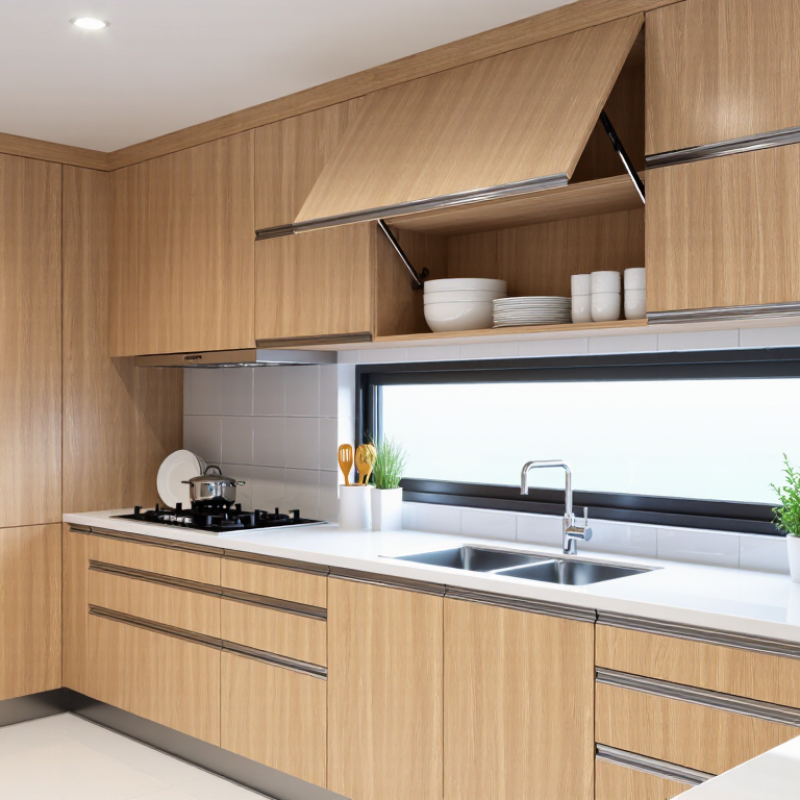
Define Wall-Cabinet Types and Plan Around the 305–356 mm Depth Standard
How to Choose China Best Kitchen Wall Cabinets?
Choosing kitchen wall cabinets begins with the wall, not the finish. Standard wall units usually measure 305 to 356 mm deep. This range protects counter workspace and leaves room for movement. Deeper cabinets can feel heavy. They may also interfere with lighting, doors, or ventilation.
Define the cabinet type before comparing construction. Standard overhead cabinets suit plates, glasses, and dry goods. Glass-front units display dishes but require tidy storage. Corner cabinets use awkward wall space efficiently. Lift-up doors work well above a coffee station. Open shelves provide quick access, though they collect dust faster. Tall wall units need careful review. They may reduce visual balance and make upper storage difficult to reach.
When sourcing from China, request exact box dimensions, material details, edge-sealing methods, and mounting hardware specifications. Measure the wall, ceiling, backsplash, and appliances together. A few millimeters can affect alignment. A 356 mm cabinet box may project farther after adding doors and handles. I once saw a neat layout become uncomfortable because a microwave door struck a cabinet handle. That mistake was avoidable. Check appliance clearances and local installation requirements with a qualified professional. Samples should be inspected under kitchen lighting, not only in a showroom. Measurements still deserve a second review.
| Wall-Cabinet Type | Typical Width Range | Typical Height Range | Recommended Cabinet Depth | Best Use | Planning and Installation Considerations |
|---|---|---|---|---|---|
| Single-Door Wall Cabinet | 300–600 mm | 300–900 mm | 305–356 mm | Compact storage for cups, glasses, dry goods, and everyday tableware. | A practical choice for narrow wall sections. Check the door swing against adjacent cabinets, walls, windows, and lighting fixtures. |
| Double-Door Wall Cabinet | 600–900 mm | 600–900 mm | 305–356 mm | General-purpose storage above a countertop or preparation area. | Use adjustable shelves for flexible storage. Two doors can reduce the swing clearance required on each side compared with one very wide door. |
| Lift-Up Door Cabinet | 600–1200 mm | 600–900 mm | 305–356 mm | Wide storage with an unobstructed opening for frequently used kitchen items. | Allow sufficient vertical clearance above the cabinet for the selected lift mechanism. Confirm door weight, opening angle, and hardware load capacity. |
| Corner Wall Cabinet | 600–900 mm per side | 600–900 mm | 305–356 mm | Uses the corner where two runs of wall cabinets meet. | Confirm the corner angle and filler dimensions before production. A bi-fold door or angled front can improve access to the internal space. |
| Open Shelf Wall Cabinet | 300–900 mm | 300–900 mm | 250–330 mm | Display storage for dishes, cookbooks, containers, and decorative items. | The shallower end of the range can reduce visual bulk. Plan a finished back panel and secure fixing because the contents remain exposed. |
| Plate Rack or Dish-Storage Cabinet | 450–900 mm | 600–900 mm | 305–356 mm | Vertical storage for plates, bowls, and serving pieces near a sink or preparation zone. | Measure the diameter and height of the stored dishes. Include drainage, ventilation, or a removable tray if wet dishes may be placed inside. |
| Microwave Wall Cabinet | 600–900 mm | 450–750 mm | 355–450 mm | Dedicated housing for a microwave or compact countertop appliance. | Do not assume the standard 305–356 mm depth is sufficient. Verify appliance depth, plug position, ventilation requirements, and the manufacturer’s minimum clearances. |
| Range-Hood Cabinet | 600–900 mm | 300–600 mm | 305–356 mm | Conceals or surrounds a ducted or recirculating range hood. | The cabinet width should coordinate with the cooktop or range. Reserve space for the hood body, ducting, electrical connection, heat protection, and service access. |
| Tall-Height Wall Cabinet | 300–900 mm | 900–1200 mm | 305–356 mm | Maximizes vertical storage for less frequently used cookware and packaged goods. | Check ceiling height, crown moulding, door reach, and wall fixing points. Split the cabinet into zones or use lift-assisted doors for easier access. |
| Glass-Front Wall Cabinet | 450–900 mm | 600–900 mm | 305–356 mm | Display storage for glassware, ceramics, and coordinated tableware. | Select safety glass where appropriate, verify hinge compatibility, and provide interior lighting only after confirming heat and cable-management requirements. |
Compare Board Materials Using CARB Phase 2’s 0.05 ppm HWP Limit
How to Choose China Best Kitchen Wall Cabinets?
When choosing kitchen wall cabinets from China, board material deserves close attention. Hardwood plywood, or HWP, must meet CARB Phase 2’s 0.05 ppm formaldehyde emission limit. This figure applies to the panel, not automatically to the complete cabinet. Ask for recent third-party test reports before comparing prices.
Look closer at the core. Hardwood plywood usually offers good screw-holding strength and stable layers. MDF provides a smooth surface for painted doors, but its emission limit is higher at 0.11 ppm. Particleboard is often more economical, with a CARB Phase 2 limit of 0.09 ppm. These limits are different, so “CARB compliant” alone is not enough information. Check the exact board type.
Check the paperwork.
During factory reviews, inspect unfinished panel edges, drilling areas, and cabinet backs. Poor edge sealing can expose the core and affect durability, even when the board passed testing. Ask whether the report covers the same thickness, production site, and material used in your order. A certificate from an unrelated batch may create false confidence. I have seen attractive samples hide weak screw joints and thin back panels. That mistake is easy to make. Also consider ventilation, adhesives, and surface coatings, because the final cabinet is a combined product. A lower emission result is valuable, but it does not replace careful construction checks.
How to Choose China Best Kitchen Wall Cabinets?
Compare Board Materials Using CARB Phase 2’s 0.05 ppm HWP Limit
The chart compares CARB Phase 2 formaldehyde emission limits for common composite wood panels. Lower values indicate a stricter emission limit. Hardwood plywood has the lowest limit at 0.05 ppm, while particleboard, MDF, and thin MDF have higher allowable limits. Actual cabinet performance also depends on panel construction, edge sealing, surface finishes, ventilation, and production quality.
Reference: California Air Resources Board (CARB) Airborne Toxic Control Measure Phase 2 emission limits. Values shown are regulatory limits, not test results for a specific product.
Verify Construction Quality Against KCMA A161.1 and EN 14749 Standards
How to Choose China’s Best Kitchen Wall Cabinets?
When choosing China’s best kitchen wall cabinets, look beyond paint, price, and showroom lighting. Ask for test evidence against KCMA A161.1 and EN 14749. These standards examine strength, durability, loading, and safety under defined conditions. A credible supplier should identify the tested cabinet construction, materials, hardware, and laboratory. Do not accept a certificate with no model reference.
During a factory visit, inspect the hanging rail, back panel, and cabinet-to-wall fixing points. Load shelves with test weights, then open and close doors repeatedly. Watch for joint movement, sagging, chipped edges, or loose screws. EN 14749 is especially useful for checking stability and safe use in domestic kitchens. KCMA A161.1 helps assess functional performance, including door, drawer, and structural endurance. Ask whether testing covered moisture exposure and repeated loading, not only appearance.
A clean finish proves little. I once trusted a thick-looking panel and missed a weak rear connection. That mistake changed my inspection checklist. Now I measure panel thickness, examine edge sealing, and photograph hidden joints. Small details matter. Look underneath. Standards are not a substitute for installation judgment. An excellent cabinet can fail when anchors meet hollow walls or uneven masonry. Request installation instructions, load limits, maintenance guidance, and traceable test dates. If documents conflict with the sample, pause the order and investigate.
Assess China Suppliers Through MOQ, Lead Time, QC, and Factory Audits
How to Choose China Best Kitchen Wall Cabinets?
China suppliers should be compared through measurable conditions, not attractive catalog photos. Start with MOQ. A 50-unit MOQ may suit a trial project, while 500 units can reduce unit cost but increase inventory risk. Ask whether the MOQ applies to each cabinet style, finish, or total order. Request a written lead-time plan, including drawing approval, material purchasing, production, inspection, and shipping. The World Bank’s 2023 Logistics Performance Index gave China a score of 3.7 out of 5, but factory scheduling still varies widely. Fast shipping cannot repair slow production.
Tips: Build a supplier scorecard. Record MOQ, sample time, production days, defect limits, and audit findings. Require first-article approval before mass production. Use measurable checks for panel thickness, edge bonding, hinge alignment, color consistency, and carton strength. ISO’s 2023 Survey recorded more than 1.2 million ISO 9001 certificates worldwide, yet certification alone does not prove daily factory discipline. Request recent audit records, equipment lists, worker training files, and corrective-action evidence. An independent pre-shipment inspection adds useful distance from the supplier’s own claims. I have seen polished samples hide uneven drilling and weak packaging. That possibility deserves attention. Lead times also need a buffer, because one delayed component can hold an entire cabinet order.
Match Hardware, Certifications, Warranty, and Total Cost to Project Needs
How to Choose China Best Kitchen Wall Cabinets?
Choosing China-made kitchen wall cabinets requires more than comparing panel prices. Match hardware, certifications, warranty terms, and total cost to your project’s actual demands. Houzz’s 2024 U.S. Kitchen Trends Study reports that 76% of renovating homeowners upgraded their cabinets. That figure shows how strongly storage quality affects renovation decisions.
Test hinges and drawer runners with sample units. Soft-close hardware should move quietly and remain aligned after repeated use. Ask for cycle-test evidence, material specifications, and replacement procedures.
Moisture-resistant board matters in kitchens with steam, frequent cleaning, or poor ventilation. Small details matter. A low quote can still be expensive when hardware fails early.
Request certification documents that fit your destination market. Relevant evidence may include ISO 9001 production controls, FSC chain-of-custody documentation, and formaldehyde-emission compliance such as EPA TSCA Title VI or EN standards. The NKBA 2024 Kitchen Trends Report highlights storage efficiency and practical functionality as continuing priorities. Warranty language should state coverage periods, exclusions, labor responsibility, and response times. Calculate total cost, including packaging, shipping, duties, installation, spare parts, and possible replacements. A longer warranty is not automatically better. It may contain narrow exclusions. Review the documents carefully, and admit what remains unverified before placing the order.
