
Blog
How to Choose an Electrofusion Reducing Tee in 2026?
Choosing an Electrofusion Reducing Tee in 2026 requires more than comparing prices or outlet sizes. The U.S. Environmental Protection Agency’s 7th Drinking Water Infrastructure Needs Survey estimates $625 billion in drinking water investment needs over the next 20 years. Aging networks will demand fittings that support safe repairs, controlled branching, and long service life. The fitting may be small. Its consequences are not.
A reliable selection begins with the pipe system, not the catalog page. Confirm the polyethylene grade, outside diameter, SDR, pressure class, and branch dimensions. ISO 4427-3 provides requirements for polyethylene fittings used in water applications. ASTM F1055 covers electrofusion-type polyethylene fittings and offers another important technical reference. The Plastics Pipe Institute’s Handbook of Polyethylene Pipe also emphasizes compatibility, surface preparation, fusion control, and cooling time. These details affect joint strength.
Look closely at traceability. A suitable tee should carry clear identification, fusion parameters, material information, and dimensional data. Check whether the manufacturer validates performance through recognized testing. On site, scraping depth, contamination, ambient temperature, generator stability, and clamp alignment can change the result. Small errors matter. A neat-looking joint can still be weak.
This guide will examine how to choose an Electrofusion Reducing Tee for municipal, industrial, and utility projects in 2026. It will compare design requirements, standards, installation risks, supplier evidence, and lifecycle value. Some project assumptions may prove wrong. That is worth acknowledging. Careful selection improves when engineers question convenient specifications instead of accepting them blindly.
What Is an Electrofusion Reducing Tee and How Does It Work?
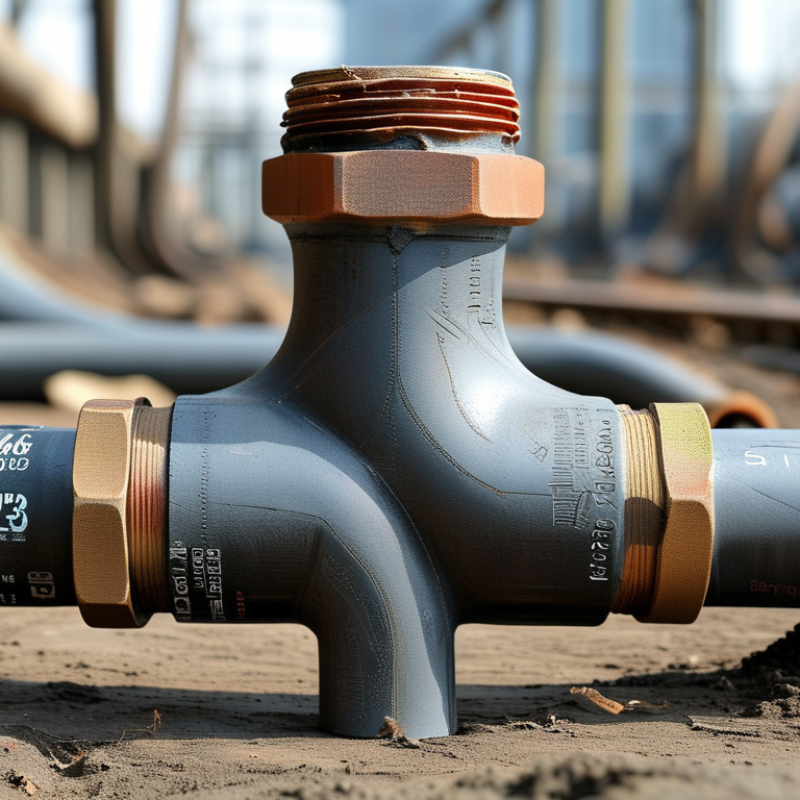
An electrofusion reducing tee is a polyethylene fitting with three outlets, including one smaller branch. Its built-in resistance wires create controlled heat around the pipe surface. The softened polyethylene then bonds with the fitting during cooling. No flame is used.
ISO 12176-2 covers electrofusion equipment, electrical control, and fusion procedures. In practice, the installer must scrape oxidation, remove moisture, clamp the pipes, and respect the cooling time. Small contamination can cause a hidden leak. A perfect-looking joint can still fail. That detail deserves more attention.
When choosing one in 2026, check the pipe diameter, SDR rating, pressure class, and resin compatibility. Confirm that the tee supports the required service temperature. A barcode or fusion record also improves traceability. The OECD Global Plastics Outlook projects global plastic waste to nearly triple by 2060. Reliable joints can reduce replacement work and wasted material, although durability depends on installation quality. I would not select a tee by price alone. The fitting must match the pipe system, fusion machine, and approved procedure. For critical water or gas work, verify certificates, dimensional tolerances, and test records before installation.
Which Pipe Materials and Sizes Match the Reducing Tee?
How to Choose an Electrofusion Reducing Tee in 2026?
The pipe material must match the reducing tee’s fusion material. For polyethylene systems, choose a tee made for the same polyethylene family, such as PE100 or PE4710. Do not assume every black plastic fitting is compatible. PVC, PPR, and ordinary polypropylene require different joining methods unless the fitting is specifically designed for electrofusion. Check the technical sheet for resin compatibility, operating temperature, and pressure performance.
Size matching depends on outside diameter, not only the nominal pipe name. A 110 mm main pipe may need a 63 mm branch, but the tee must support those exact dimensions. Confirm the pipe’s SDR, wall thickness, and pressure class. The fitting’s fusion zone must fully cover the prepared pipe surface. A loose fit is unacceptable. A forced fit is also risky. I have seen installation teams focus on diameter while overlooking SDR, which created an avoidable design review.
Tips: Measure the pipe before ordering. Clean and scrape the fusion area carefully. Keep the joint dry and stable during heating and cooling. Follow the fitting’s stated voltage, heating time, and cooling period. Record batch details and site conditions. Small temperature changes can affect preparation quality. Even experienced installers sometimes rush alignment, especially in narrow trenches. That mistake deserves more attention. When dimensions seem unclear, request written confirmation from a qualified technical source before cutting the pipe.
How to Evaluate Pressure Ratings and Technical Specifications?
How to Choose an Electrofusion Reducing Tee in 2026?
Pressure rating should be checked against the complete piping system, not the fitting alone. An electrofusion reducing tee marked PN16 may not safely support PN16 service at every temperature. Confirm the pipe material, SDR, diameter, and operating temperature before selection. PE100 components often provide reliable strength, but heat, pressure surges, and poor installation can reduce performance. Pressure matters most.
Read the technical datasheet carefully. Check the fitting’s rated pressure, allowable temperature range, fusion parameters, socket dimensions, and dimensional tolerances. The tee should match the pipe’s resin classification and SDR range. Standards such as ISO 4427, EN 12201, or applicable national requirements can support technical verification. However, standard compliance does not replace project-specific calculations.
Field inspections often find mismatched SDR values or incomplete fusion records. That is a serious warning. Review pressure-test procedures, traceability markings, barcode data, and batch certificates before installation. Consider transient pressure caused by pumps or rapid valve closure, not only normal working pressure. A conservative design leaves room for aging and temperature variation. I have seen specifications look correct on paper but fail during installation because the fusion machine lacked proper calibration. Recheck everything. Temperature derating tables and documented installer training deserve equal attention.
How to Choose an Electrofusion Reducing Tee in 2026? - How to Evaluate Pressure Ratings and Technical Specifications?
| Evaluation Dimension | Recommended Reference Data | Why It Matters | Acceptance Check |
|---|---|---|---|
| Fitting type | Electrofusion reducing tee with one smaller branch outlet | Confirms that the fitting matches the required pipe layout and branch size. | The body, sockets, branch outlet and fusion zones must match the approved design drawing. |
| Body material | PE 100 is commonly selected for pressure water and gas applications; PE 80 may be specified for particular systems. | Material grade affects strength, long-term hydrostatic performance and compatibility with the pipe. | Check the material designation, melt-flow requirement and batch traceability on the product documentation. |
| Compatible pipe outside diameters | Typical combinations include 63/32 mm, 90/63 mm, 110/63 mm, 160/110 mm, 225/160 mm and 315/225 mm. The first value is the run OD; the second is the branch OD. | Electrofusion sockets are designed around the pipe outside diameter, not the nominal bore. | Confirm both pipe ODs, SDR classes and socket dimensions before ordering. |
| Standard Dimension Ratio (SDR) | Common pressure-pipe classes include SDR 11 and SDR 17; other SDRs require a matching fitting qualification. | SDR is the ratio of pipe outside diameter to wall thickness and is directly related to pressure capacity. | The fitting must be rated for the same or an approved compatible pipe SDR. |
| Indicative PE 100 pressure rating at 20°C | SDR 11: approximately PN 16 for water; SDR 17: approximately PN 10 for water. | Provides an initial comparison of allowable operating pressure under standard reference conditions. | Use the lower pressure rating of the pipe, fitting, valve or other system component. |
| Pressure rating of the reducing branch | The branch should have a pressure rating equal to or greater than the design pressure of the branch pipeline. | A smaller outlet may have a different wall thickness, SDR and pressure class from the main run. | Evaluate the run and branch independently; do not assume both outlets have the same PN rating. |
| Temperature derating | The PN values above are generally referenced at 20°C. Allowable pressure normally decreases as operating temperature rises. | PE pressure performance is temperature dependent, especially in continuous service. | Apply the applicable standard or manufacturer derating curve for the actual fluid temperature and service life. |
| Hydrostatic design basis | For PE 100 pressure design, the long-term hydrostatic strength is commonly based on 10 MPa at 20°C for 50 years, subject to the governing standard. | Shows how the pressure class is derived from long-term material performance rather than short-term burst pressure. | Request the applicable design coefficient, product standard and test classification. |
| Applicable product standards | Potential references include ISO 4427, EN 12201, ISO 4437, ASTM F1055 and applicable national standards. | Standards define dimensions, material requirements, pressure performance, testing and installation compatibility. | Select the standard required by the project jurisdiction and service application; do not mix incompatible dimensional systems. |
| Electrofusion voltage | Common systems use approximately 39.5 V, but the exact voltage, current and fusion time are fitting-specific. | Incorrect electrical parameters can cause incomplete fusion, overheating or joint failure. | Use the barcode or fusion label and a compatible control unit; never estimate fusion time manually. |
| Fusion-zone design | The socket should provide a defined heating zone, cold zone, insertion stop and adequate fusion indicator. | A controlled fusion zone promotes even melting and helps prevent pipe over-insertion. | Inspect the socket for damage, contamination, exposed wire or displaced heating elements. |
| Minimum pipe wall and ovality | Pipe wall thickness must correspond to the fitting qualification; pipe ovality should be within the installation standard or product instructions. | Excessive ovality or an incorrect wall section can reduce contact pressure and fusion quality. | Measure pipe OD, wall thickness and ovality after cutting and before scraping. |
| Installation preparation | Clean, scrape and align all fusion surfaces; keep the joint dry and protected from contamination. | Oxidized PE, dirt, moisture and movement are common causes of poor electrofusion joints. | Use calibrated scraping tools, suitable clamps and the specified cooling time before pressure testing. |
| Pressure testing | Hydrostatic testing is generally preferred for water systems; test pressure and hold time must follow the governing standard. | Testing verifies system integrity without exceeding the allowable pressure of the weakest component. | Allow the joint to cool fully and record test pressure, temperature, duration and results. |
| Traceability and documentation | Product marking, production batch, dimensions, SDR/PN rating, material grade, fusion parameters and conformity documents. | Traceability supports quality control, installation records and future maintenance. | Reject products with missing markings, unreadable labels or incomplete technical documentation. |
How to Select the Right Design for Installation Conditions?
How to Choose an Electrofusion Reducing Tee in 2026?
Selecting an electrofusion reducing tee starts with the installation environment, not the catalogue image. Measure the main pipe and branch outside diameters carefully. Confirm the polyethylene grade, SDR, pressure rating, and service temperature. The fitting must match the pipe system. A small dimensional error can prevent proper fusion.
Trench conditions also affect the design. In a narrow excavation, choose a compact tee with enough clearance for clamps and fusion cables. Wet soil requires controlled dewatering and clean, dry fusion zones. Cold weather may slow heating, while strong sunlight can warm one side unevenly. Use approved fusion parameters and record voltage, heating time, cooling time, and operator details. Never rely on appearance alone.
Think about future maintenance. A short branch may suit a cramped service connection, but a longer branch can improve tool access. Check whether the reducing outlet needs an isolation valve, support, or extra restraint. Inspect scraping depth and alignment before energizing the unit. I have seen good fittings fail after rushed preparation. That mistake is easy to repeat. Site crews should also verify generator stability, cable condition, and fitting storage. The tee should remain sealed, undamaged, and protected from contamination until installation. Field judgment matters, yet written procedures and qualified supervision should guide every decision.
How to Check Quality, Standards, Compatibility, and Supplier Support?
How to Choose an Electrofusion Reducing Tee in 2026?
Choosing an electrofusion reducing tee starts with the pipe, not the catalogue. Confirm the outside diameters, SDR values, pressure class, and polyethylene grade. A tee designed for PE100 may not suit every PE compound or installation condition. Check technical data and the applicable standard, such as ISO 4427, EN 12201, or ASTM F1055. Standards differ. Verify certification requirements with the project engineer or utility owner.
Quality appears in small details. Look for clean fusion zones, consistent socket dimensions, clear terminal markings, and protected heating wires. Request batch traceability, dimensional inspection records, pressure-test results, and quality-system documentation. Store the fitting away from sunlight, mud, and damaged packaging. Even a certified part can fail after careless handling. Ovalized pipe ends are easy to overlook. That mistake deserves more attention.
Compatibility also includes the control unit, scraper tools, clamps, and fusion procedures. Confirm voltage, resistance range, fusion time, and cooling requirements before arriving on site. A reliable supplier should provide current instructions, training, replacement support, and qualified technical assistance. Request sample inspection documents, not vague promises. Delivery speed matters. Support continuity matters more. No checklist is perfect, but weak supplier communication is a warning sign. Lowest price is not always the lowest cost.
How to Choose an Electrofusion Reducing Tee in 2026?
Use the applicable product and application standards to verify quality, compatibility, and documentation before purchasing an electrofusion reducing tee.
The chart shows whether each standard directly addresses the listed selection area: polyethylene fittings, electrofusion construction, water-pressure applications, or gas-supply applications. A value of 1 means the area is addressed; 0 means it is not the primary scope of that standard. Always confirm the tee’s SDR/pressure class, pipe outside-diameter system, resin compatibility, fusion parameters, traceability records, and supplier technical support against the project specification.
