
Blog
7 Best Water Chillers for Industrial Cooling in 2026?
Industrial cooling rarely fails in a dramatic way. More often, a warm process line, unstable temperature, or blocked condenser signals trouble first. Choosing the right Water Chiller can prevent these small warnings from becoming expensive production losses.
This guide examines seven leading Water Chiller options for industrial cooling in 2026. It considers cooling capacity, leaving-water temperature, flow stability, energy efficiency, noise, controls, and service access. A unit rated for 100 tons may not perform equally in a dusty plant or under high summer temperatures. Site conditions matter. They always do.
The evaluation also considers manufacturer documentation, published efficiency data, warranty coverage, and practical maintenance requirements. Operators should verify actual performance against process loads, ambient temperatures, and water quality before purchasing. Independent testing is valuable, but some specifications remain difficult to compare across brands. That limitation deserves attention. No shortlist is perfect.
A reliable chiller should hold a steady temperature during long production cycles, not only perform well in a showroom. Look for clear alarms, accessible filters, corrosion-resistant components, and responsive technical support. Refrigerant regulations and local safety requirements may also influence the final decision. The best choice is not necessarily the most powerful model. It is the system that delivers dependable cooling, manageable operating costs, and serviceable performance over years of demanding use.
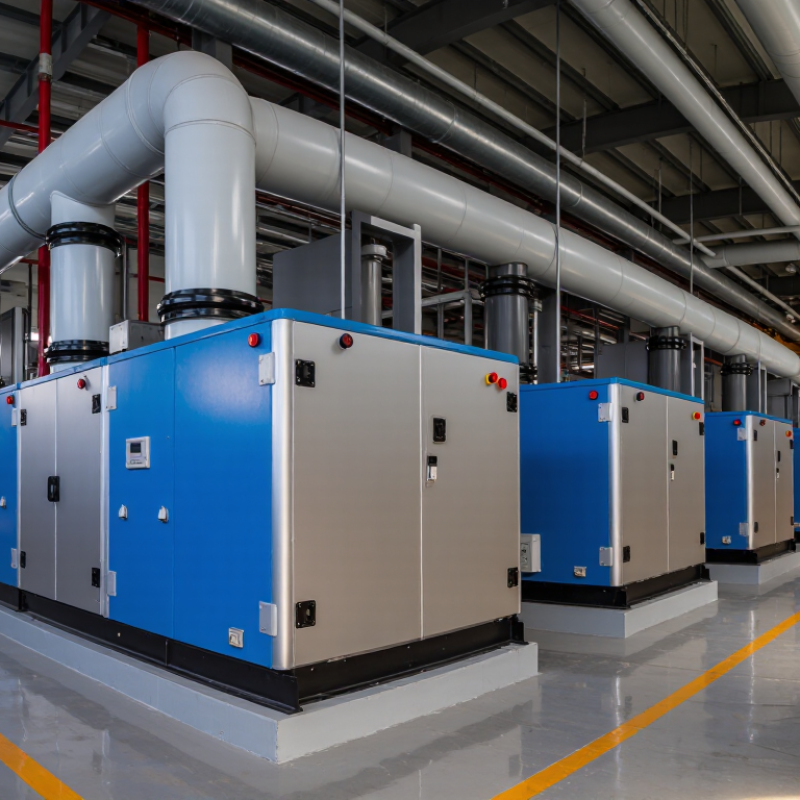
What Industrial Water Chillers Do and How They Work
Industrial water chillers remove heat from process water and transfer it to the surrounding environment. The cooled water then returns through a closed piping loop. This cycle supports injection molding, food processing, chemical production, laser systems, and other heat-sensitive operations.
The refrigeration circuit contains a compressor, condenser, expansion valve, and evaporator. In the evaporator, refrigerant absorbs heat from returning process water. The compressor raises the refrigerant pressure and temperature. The condenser releases that heat through air or cooling water. The expansion valve lowers pressure before the cycle repeats. Pumps maintain flow, while sensors monitor temperature, pressure, and system alarms.
Sizing requires more than reading a machine’s cooling capacity. Engineers should check heat load, water flow, inlet temperature, ambient conditions, operating hours, and allowable temperature variation. Glycol may protect pipes in cold environments, but it can reduce heat-transfer performance. An oversized chiller may short-cycle and waste energy. This detail is often missed.
In practical maintenance, technicians inspect strainers, clean heat-transfer surfaces, test water quality, and verify refrigerant pressures. Fouled condensers can quietly increase power consumption. Poor flow can cause unstable temperatures and premature component wear. I would also question a very low temperature setting. It may sound safer, yet the process might not need it. Reliable cooling depends on measured demand, steady circulation, and honest review of operating data.
Main Water Chiller Types Used in Industrial Cooling
Industrial cooling rarely has one universal chiller. The main types include air-cooled, water-cooled, evaporative, and absorption systems. Each removes heat differently. That choice affects energy use, maintenance, and installation space.
Air-cooled chillers reject heat through finned coils and fans. They suit facilities with limited water access. Their output can decline during very hot afternoons. Water-cooled chillers transfer heat through a condenser and cooling tower. They often provide steadier efficiency for large, continuous loads. However, towers require water treatment, cleaning, and biological control. Evaporative chillers use water evaporation to improve heat rejection. They may reduce power demand in dry climates. Humid conditions weaken that benefit. I have seen poor water quality increase maintenance costs within months.
Screw chillers handle demanding, long-running process loads with stable capacity control. Scroll chillers are compact and fit smaller duty ranges. Absorption chillers use heat instead of mainly electrical compression. They can work well where waste heat is available, but their controls need careful adjustment. Glycol circuits protect low-temperature processes, although excess glycol reduces heat transfer. Sizing by nameplate capacity alone is a mistake. Real selection needs flow rate, leaving-water temperature, load variation, ambient conditions, and redundancy. Engineers should inspect pump curves and service access. A perfect specification can fail beside a dusty furnace.
7 Best Water Chillers for Industrial Cooling in 2026? – Main Water Chiller Types Used in Industrial Cooling
| Rank | Water Chiller Type | Typical Cooling Capacity | Typical Leaving-Water Temperature | Typical Efficiency Range | Water Requirement | Best Industrial Applications | Main Advantages | Key Considerations |
|---|---|---|---|---|---|---|---|---|
| 1 | Water-Cooled Screw Chiller | 100–2,000 refrigeration tons (350–7,000 kW) | 6–12°C (43–54°F) | Approximately 0.55–0.75 kW/ton at full load | Condenser-water loop and cooling tower required | Large process plants, chemical production, food processing, plastics, and central utility systems | High capacity, strong part-load performance, and long operating life when properly maintained | Higher installation complexity; condenser-water treatment and tower maintenance are necessary |
| 2 | Air-Cooled Scroll Chiller | 2–200 refrigeration tons (7–700 kW) | 6–18°C (43–64°F) | Approximately 0.85–1.20 kW/ton at full load | No condenser-water loop; only the chilled-water circuit is required | Small and medium factories, machine cooling, laboratories, warehouses, and packaged process systems | Simple installation, lower water consumption, compact footprint, and easy capacity staging | Outdoor airflow and ambient temperature strongly affect performance; fan noise may require control |
| 3 | Centrifugal Chiller | 300–10,000+ refrigeration tons (1,050–35,000+ kW) | 4–12°C (39–54°F) | Approximately 0.45–0.65 kW/ton near design conditions | Condenser-water loop and cooling tower required | Very large manufacturing campuses, district cooling, data centers, and continuous-process facilities | Excellent efficiency at large capacities and relatively low vibration | Higher first cost, specialized servicing, and reduced suitability for very low-load operation without proper controls |
| 4 | Water-Cooled Reciprocating Chiller | 5–150 refrigeration tons (18–530 kW) | -5–12°C (23–54°F), depending on configuration | Approximately 0.75–1.10 kW/ton at full load | Condenser-water loop and cooling tower required | Small process loads, cold storage, beverage production, and applications requiring flexible refrigerant control | Good low-load control, adaptable capacity, and proven mechanical design | More moving parts and pulsation than screw or centrifugal designs; vibration isolation may be needed |
| 5 | Modular Scroll Chiller | 10–500 refrigeration tons (35–1,760 kW) in staged systems | 5–18°C (41–64°F) | Approximately 0.80–1.15 kW/ton at full load | Usually air-cooled; some configurations use a condenser-water loop | Expanding factories, distributed production areas, injection molding, electronics, and equipment cooling | Redundancy, staged capacity, simplified expansion, and reduced downtime during module service | Requires coordinated controls and adequate hydraulic balancing between modules |
| 6 | Absorption Chiller | 100–2,000 refrigeration tons (350–7,000 kW) | 6–12°C (43–54°F) | Approximately 0.70–1.20 COP, depending on single- or double-effect design | Chilled-water and condenser-water loops; heat source such as steam, hot water, or waste heat required | Plants with continuous waste heat, combined heat and power systems, refineries, and large process facilities | Can reduce electrical demand and recover otherwise wasted thermal energy | Needs a reliable heat source, cooling tower, water treatment, and careful corrosion management |
| 7 | Low-Temperature Process Chiller | 1–300 refrigeration tons (3.5–1,050 kW) | -40–5°C (-40–41°F) | Approximately 1.00–2.00 kW/ton, depending on temperature lift | Typically air-cooled; water-cooled versions are also available for larger systems | Chemical processing, pharmaceutical production, laser equipment, battery manufacturing, and laboratory processes | Maintains stable sub-zero process temperatures and supports precise thermal control | Lower efficiency at very low setpoints; glycol concentration, viscosity, insulation, and freeze protection must be evaluated |
| Note: Capacity, temperature, and efficiency figures are typical engineering ranges rather than guaranteed ratings. Actual performance depends on entering and leaving temperatures, ambient conditions, fouling, fluid type, flow rate, controls, and operating load. | ||||||||
Seven Best Water Chillers for Industrial Cooling in 2026
Industrial cooling now demands lower energy use, stable temperatures, and easier maintenance. The International Energy Agency reports that cooling demand could more than triple by 2050. That pressure makes chiller selection a production decision, not a simple equipment purchase.
The seven strongest options are air-cooled screw chillers, water-cooled screw chillers, centrifugal chillers, magnetic-bearing centrifugal chillers, modular scroll chillers, absorption chillers, and heat-recovery chillers. Air-cooled screw units suit sites with limited water supplies. Water-cooled designs usually deliver better efficiency, but cooling towers require careful treatment. Centrifugal systems fit large, steady loads. Magnetic bearings reduce oil-related maintenance. Modular scroll units provide useful redundancy for changing production schedules. Absorption chillers can use waste heat, though their controls may demand more operator training. Heat-recovery models support simultaneous cooling and process-water heating.
The U.S. Department of Energy’s Industrial Decarbonization Roadmap highlights efficiency improvements as a practical industrial emissions strategy. Actual performance still depends on entering water temperature, fouling, part-load hours, and pump control. Small details matter. A dirty strainer can erase impressive catalogue efficiency. AHRI Standard 550/590 supports consistent chiller testing, yet field conditions rarely match laboratory conditions. I would compare integrated part-load values, seasonal kW per ton, refrigerant requirements, service access, and controls compatibility. One uncomfortable point remains: the cheapest quotation may become the most expensive choice after three summers.
How to Compare Chiller Capacity, Efficiency, and Reliability
7 Best Water Chillers for Industrial Cooling in 2026?
Comparing chillers starts with the real heat load, not the catalog capacity. Record process temperatures, flow rates, ambient conditions, and peak production hours. A unit rated at 500 tons may deliver less capacity when condenser water reaches 32°C. Oversizing also creates problems. Short cycling wastes energy and stresses compressors.
Efficiency needs more than one headline number. Use full-load and part-load values under AHRI 550/590 testing conditions. The U.S. Department of Energy notes that integrated part-load performance better reflects annual chiller operation. That matters because factories rarely run at peak load all day. IEA’s The Future of Cooling reports that global cooling energy demand could more than triple by 2050. Small efficiency gaps may become expensive.
Look at kW per ton, leaving-water temperature, and control range. Ask for measured performance data, not only simulations. Reliability depends on redundancy, water treatment, vibration control, and service access.
A 2023 industrial survey by the U.S. Department of Energy identifies preventive maintenance and monitoring as practical energy-saving measures. Include alarm history, compressor starts, and approach temperatures in the review. Keep spare parts nearby.
The spreadsheet can still mislead.
A technically efficient chiller may fail your site if technicians cannot inspect its filters quickly. Compare five-year energy costs, not purchase price alone. Then test the assumptions against one summer shift and one low-load shift.
How to Select, Install, and Maintain an Industrial Water Chiller
Industrial water chiller selection begins with the process, not the catalog. Record peak heat load, fluid type, entering temperature, leaving temperature, flow, and operating hours. Include fouling, future production, and ambient extremes. ASHRAE Handbook—HVAC Systems and Equipment (2024) commonly uses a 10°F chilled-water design difference. That figure is not universal. An undersized unit struggles, while an oversized unit short-cycles and wastes capital. The IEA’s The Future of Cooling reports that cooling energy demand could more than triple by 2050 without stronger efficiency measures.
Installation quality can decide real efficiency. Place the chiller on a rigid, level foundation with service clearance and proper ventilation. Match pipe diameter to flow, then insulate every cold surface. Install strainers, isolation valves, flow meters, and vibration control. AHRI Standard 550/590-2023 provides standardized rating conditions for comparing capacity and efficiency. Still, laboratory ratings cannot fully predict a dusty factory or unstable production schedule.
Maintenance should be measurable. Check refrigerant pressures, approach temperatures, pump power, water chemistry, and condenser cleanliness. Log kW per ton monthly. DOE Better Buildings guidance emphasizes plant-level performance, not nameplate efficiency alone. Clean strainers early. Small restrictions become expensive. A common mistake is delaying tube cleaning until capacity drops visibly. Trend data catches the problem sooner, although sensors can drift and require calibration. Review alarms, inspect insulation, and test safety controls before seasonal load changes.
Industrial Water Chiller Cooling Capacity at Different Water Flow Rates
The chart shows the theoretical cooling capacity of an industrial chilled-water loop at a constant 5°C temperature difference between entering and leaving water. Capacity is calculated using water density of 1,000 kg/m³ and a specific heat capacity of 4.186 kJ/kg·K.
Formula: Cooling capacity (kW) = Water flow (m³/h) × 1.163 × Temperature difference (°C). Actual chiller selection should also consider ambient conditions, fouling, pump performance, control range, water quality, and required safety margin.
