
Blog
7 Best Silicone Mat Rolls for Baking in 2026?
A Silicone Mat Roll can make baking simpler, especially when you need a custom-sized surface for a crowded counter or a narrow oven tray. But a roll is not automatically better than a standard sheet. Its value depends on how easily it unrolls, whether it stays flat, and how much trimming your kitchen actually requires.
This guide to the 7 Best Silicone Mat Rolls for Baking in 2026 compares practical features rather than relying on flashy product claims. We consider dimensions, thickness, cleaning instructions, storage, and stated heat limits. A mat should suit the recipes you bake, from sticky cookie dough to kneaded bread, without forcing you to guess whether it fits your pan. Clear care directions matter, too. Silicone products can differ, so always check each manufacturer’s temperature and use recommendations.
Still, no mat is perfect. A roll may curl at the edges, take up awkward drawer space, or resist lying flat after storage. That matters. The selections below are intended to help you weigh those trade-offs before buying, not promise identical results in every kitchen. Look closely at usable width and length, since a roll that seems generous online may leave little room around a full baking sheet. We also flag details worth verifying, including food-contact information and whether the mat is designed for oven use. The goal is a useful shortlist, with enough practical context to choose a roll that fits your habits—and to question a feature that sounds better than it performs.
What Silicone Baking Mat Rolls Are and How They Work
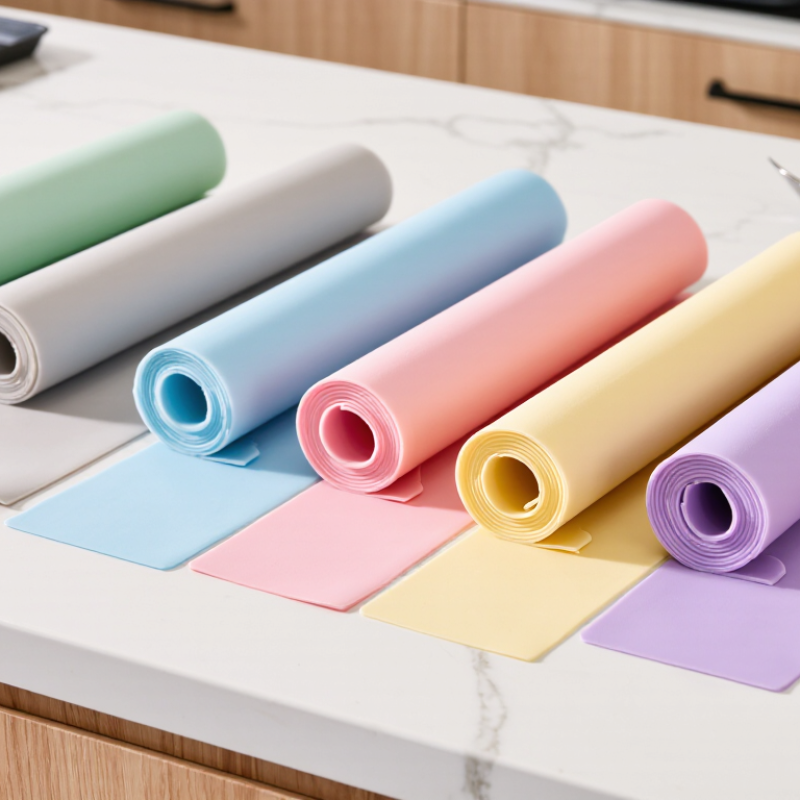
A silicone baking mat roll is a flexible, reusable baking surface sold by length instead of as a pre-cut sheet. Many mats have a woven fiberglass core coated with food-contact silicone, though construction varies. Check the product details. The mat rests on a baking tray, creating a smooth barrier between food and metal. No magic involved.
During baking, silicone helps reduce sticking and makes cleanup easier. The reinforcing layer helps the mat hold its shape and may distribute heat more evenly than a thin silicone sheet. Cookies can still brown differently than they do on bare metal. Tray material, oven behavior, and recipe all matter. For delicate dough, the surface can make lifting easier, but it cannot promise identical batches every time.
A roll can be trimmed to fit unusual pans. Measure first, then cut with clean scissors; some cut edges may expose the reinforcing layer. Place the mat on a sturdy baking sheet and follow its stated temperature limit. Keep it away from flames, broilers, and sharp knives. Let it cool before washing with warm, soapy water. Grease can linger. Inspect for tears, bubbling, or coating damage, and replace a worn mat rather than expecting it to keep working as before.
Key Features to Check Before Choosing a Baking Mat Roll
A baking mat roll should suit your oven, pan, and storage space—not just look thick in a product photo. Check the stated temperature range and whether it covers your intended use, including roasting or repeated baking. Measure your largest sheet pan before choosing a roll; a mat that curls over the rim can catch crumbs and interfere with airflow. Thickness matters, too. Very thin mats may wrinkle, while thicker ones can feel less flexible when trimming or storing. Check whether cutting is permitted, and never assume every roll is safe to cut.
Food-contact evidence deserves close attention.
Small details matter. Look for a smooth, even surface, clear care instructions, and dimensions that match your pan. A printed temperature limit alone proves little. I would also check cleaning guidance: greasy residue can linger in textured grooves, and rolled storage may encourage edges to curl. That part is easy to overlook.
Seven Silicone Mat Rolls to Consider for Baking in 2026
Seven silicone mat rolls suit different baking routines. A smooth, standard-width roll works for cookies and sheet pans. A thicker, reinforced roll may feel steadier under dough, though it can take longer to store neatly. A thin, flexible roll folds easily into a drawer. Handy, but it may shift on a slick counter. An extra-wide roll can cover larger trays, provided it fits your oven and sink.
A grid-marked roll helps portion pastry or shape evenly spaced biscuits. A textured roll offers more grip for kneading, but crumbs can collect in its grooves. A heat-rated roll is worth considering for frequent roasting; check its stated temperature range against your recipes. Small details matter. Look for clear care instructions, food-contact information, and dimensions before buying. Some rolls are designed to be cut, while others may contain reinforcement that should remain enclosed. Do not assume trimming is safe. For a practical check, lay the mat flat on a cool tray and test whether its edges curl. A mat can simplify cleanup, but it does not replace checking bake time or positioning food evenly. My own preference might change after washing; a roll that feels convenient on day one can be awkward when damp.
How the Top Baking Mat Rolls Compare in Size and Performance
When comparing silicone mat rolls, measure usable width against the inside of your baking sheet, not its outer rim. A 16-by-24-inch mat covers 384 square inches; trimming a roll can improve fit, but cannot restore a nonstick coating. Fit matters. Narrow rolls may suit small trays, while wider rolls reduce seams and edge exposure on larger pans. Check thickness and whether the surface lies flat; curled edges can catch crumbs or interfere with airflow.
Performance claims need context. ASTM D412 measures rubber-like materials’ tensile properties, and ASTM D2240 measures hardness, but neither standard alone proves even baking or easy release. In hands-on use, compare the same dough, oven setting, and tray; note browning, sticking, and cleanup after cooling. Small differences can come from the oven, not the mat. That is easy to miss.
Grand View Research estimated the global silicone market at about $18.5 billion in 2023, with projected growth through 2030. That market-wide figure signals material demand, not baking-mat quality. For buyers, stated dimensions, temperature limits, and care instructions are more useful than broad market growth. I would still want independent, like-for-like baking tests; product specifications rarely tell the whole story.
7 Best Silicone Mat Rolls for Baking in 2026? — How the Top Baking Mat Rolls Compare in Size and Performance
This brand-free comparison covers common roll-size configurations for silicone-coated fiberglass baking mats, rather than specific product models. Coverage is calculated from the listed dimensions. Heat limits and care instructions vary by product; check the packaging before use.
| Roll Configuration | Approx. Coverage | Best Fit | Performance Strength | Main Trade-Off | Typical Heat Guidance | Overall Usefulness |
|---|---|---|---|---|---|---|
| 12 in × 5 ft (30.5 cm × 1.52 m) | 5 sq ft (0.46 m²) | Small trays, toaster ovens, and occasional baking | Easy to store and cut into several small liners | Limited width for standard large baking sheets | Many silicone-coated fiberglass mats are rated up to 450°F (232°C); confirm the product’s stated limit | Good for small kitchens |
| 12 in × 10 ft (30.5 cm × 3.05 m) | 10 sq ft (0.93 m²) | Repeated small-batch baking and narrow pans | More liner material without requiring a wider roll | May not cover the full base of wider sheet pans | Use only within the temperature limit printed on the mat’s packaging | Good for frequent small batches |
| 16 in × 5 ft (40.6 cm × 1.52 m) | 6.7 sq ft (0.62 m²) | Standard home baking sheets and countertop ovens | Useful width for cutting liners sized to common pans | Shorter total length than 10-foot options | Many comparable mats list a maximum near 450°F (232°C), but ratings are product-specific | Strong everyday balance |
| 16 in × 10 ft (40.6 cm × 3.05 m) | 13.3 sq ft (1.24 m²) | Regular cookie, pastry, and roasted-vegetable preparation | Combines practical width with a longer supply | Needs more drawer or cupboard space than a short roll | Do not exceed the manufacturer’s stated maximum temperature | Best all-purpose format |
| 20 in × 5 ft (50.8 cm × 1.52 m) | 8.3 sq ft (0.77 m²) | Wide pans and custom-sized work-surface liners | Extra width allows larger single-piece cuts | May leave more unused material with narrow trays | Check the mat label; heat tolerance is not identical across products | Good for wide-pan flexibility |
| 20 in × 10 ft (50.8 cm × 3.05 m) | 16.7 sq ft (1.55 m²) | Multiple wide trays and frequent home baking | Large coverage supports varied cut sizes and repeated use | Bulkier to store and may be more material than occasional bakers need | Many mats are intended for oven use up to about 450°F (232°C); verify the individual rating | Best for versatile, regular use |
| 24 in × 10 ft (61 cm × 3.05 m) | 20 sq ft (1.86 m²) | Very wide trays, batch baking, and large custom cuts | Greatest coverage in this comparison; fewer joins between cut sections | Requires substantial storage space and careful measuring before cutting | Follow the specific product’s temperature and oven-use instructions | Best for maximum coverage |
How to Use, Clean, and Store Silicone Baking Mats
A silicone baking mat roll can be cut to fit a tray, but measure twice before trimming. Keep the mat flat on a sturdy baking sheet; it should not hang over the edges. Use it for cookies, roasted vegetables, or sticky dough, and check the product’s temperature limit before baking. Silicone conducts heat differently from bare metal, so browning may take a little longer. Watch the first batch. I still sometimes expect the bottoms to crisp faster.
Let the mat cool before cleaning. Rinse away crumbs, then wash both sides with warm water and a small amount of mild dish soap. For greasy patches, soak it briefly rather than scrubbing with a rough pad. Dry it completely with a clean towel or air-dry it flat. No rush. Store the mat flat in a drawer when possible. If space is tight, roll it loosely around a tube; sharp folds can leave stubborn creases. Avoid placing heavy pans on top, since pressure may distort the surface over time. If it stays oily or develops damage, check the maker’s care instructions before using it again.
Silicone Baking Mat Rolls: Common Oven Temperatures
These are typical recipe temperatures, not product ratings. Check the manufacturer’s instructions for the maximum safe temperature, and let mats cool before cleaning or storing them flat or loosely rolled.
