Blog
What Is the Best China Turn Mill CNC Machine?
Choosing the best China Turn-Mill CNC machine requires more than comparing prices or spindle speeds. A reliable Turn-Mill Cnc Machine combines turning, milling, drilling, and thread-cutting in one controlled setup. This can reduce handling time and improve alignment between features. However, the “best” model depends on your parts, tolerance requirements, production volume, and available floor space.
Look closely at machine construction. A rigid cast bed helps control vibration during heavy turning. A direct-drive spindle may support smoother finishing at higher speeds. Check the live-tool power, chuck size, Y-axis travel, and maximum bar diameter. These details matter when producing valve bodies, shafts, medical components, or complex fittings. Ask for sample machining results, not only catalog photographs. A test cut on stainless steel can reveal chatter, heat buildup, and chip-control problems quickly.
Supplier experience also matters. Confirm factory quality procedures, component brands, software support, installation services, and spare-parts availability. Request inspection records for positioning accuracy and repeatability. Clear technical communication can prevent expensive misunderstandings. It is easy to admire a machine during a showroom demonstration. Real production is less forgiving. Tool wear, operator training, coolant management, and maintenance access may decide long-term performance.
No single machine wins.
A careful comparison should include total ownership cost, expected output, training time, and after-sales response. Some specifications may look impressive but offer little value for your actual work. This guide examines practical selection criteria, trusted Chinese manufacturers, application suitability, and common purchasing mistakes. The goal is not to promote one model blindly, but to support a reasoned investment based on measurable evidence and realistic production needs.
What Is a China Turn Mill CNC Machine?
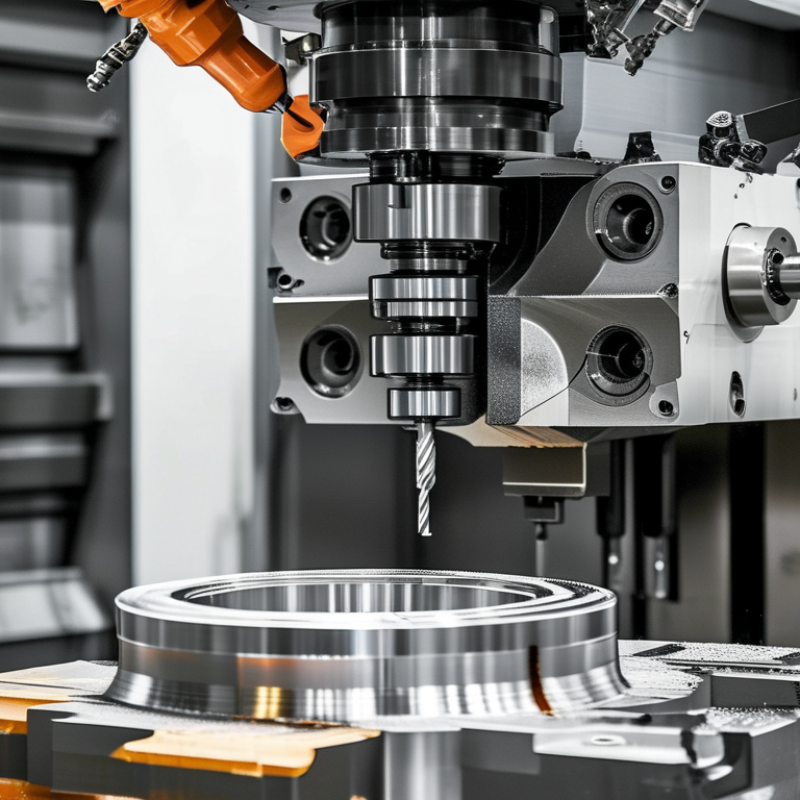
A China turn mill CNC machine is a multi-tasking machine tool made in China. It combines turning and milling in one setup. A spindle rotates the workpiece, while live tools cut slots, holes, flats, and complex contours. Many models also use C-axis and Y-axis control. Some include automatic bar feeders and tool measurement systems.
This design reduces repeated clamping and improves positional consistency. It suits shafts, valve parts, medical components, and small precision housings. The machine’s country of origin does not define its accuracy. Build quality, thermal control, guideways, spindle runout, and software integration matter more. A practical buyer should inspect test cuts, surface roughness, cycle time, and five-year maintenance records.
Market data shows strong demand. Grand View Research valued the global CNC machine market at about USD 88.6 billion in 2023. Fortune Business Insights reported a different 2023 estimate, near USD 83.9 billion. The gap deserves attention. Research methods vary, and turn mill machines are not always separated clearly. Therefore, a purchase should not rely on market size alone. In my experience, a cheaper quotation can hide weaker probing, limited training, or costly downtime. Ask for material-specific samples, spindle load data, and acceptance testing under realistic production conditions.
How Do Turn Mill CNC Machines Work?
A turn mill CNC machine combines turning and milling in one controlled setup. The workpiece rotates like a conventional lathe operation. Meanwhile, driven tools cut slots, holes, flats, and curved features. This combination reduces repeated clamping and improves alignment between machined surfaces.
The CNC control coordinates spindle speed, tool movement, and multiple axes. During turning, a fixed tool removes material from the rotating part. During milling, the machine may stop or index the spindle precisely. A live tool then rotates against the stationary workpiece. Y-axis movement can create off-center features, while C-axis control supports accurate radial machining.
Good results depend on more than machine specifications. Operators must select suitable feeds, cutting depths, tool geometry, and coolant flow. In practice, rigid workholding matters greatly. A small vibration can leave visible marks on a shaft or weaken a thin wall. Inspection after roughing is also wise, even when the program appears correct.
Small errors happen.
A reliable workflow often includes simulation, dry runs, and measured tool offsets. I have found that reducing one aggressive cutting pass can improve surface quality and tool life. However, this is not universal. Material hardness, part shape, and machine rigidity can change the best strategy. Turn mill machining saves handling time, but it demands careful programming and thoughtful verification.
Which Features Define the Best Turn Mill CNC Machine?
What Is the Best China Turn Mill CNC Machine? The answer depends on measurable performance, not appearance. The best turn mill CNC machine combines rigid construction, accurate motion, and stable multitasking. A heavy cast bed should resist vibration during interrupted cuts. A high-torque spindle should maintain power at low speeds. Live tooling also needs sufficient torque for drilling, milling, and thread cutting.
A practical machine should include Y-axis travel, a reliable B-axis, automatic tool measurement, and in-process probing. These features reduce setup errors and support complex parts in one clamping. According to the International Federation of Robotics’ World Robotics 2024 report, China installed 276,288 industrial robots in 2023. That figure shows the market’s strong move toward integrated automation. A turn mill machine should therefore communicate smoothly with loaders, robots, and factory software. Control compatibility matters.
Thermal stability deserves close attention. Linear scales, spindle cooling, and thermal compensation can protect accuracy during long cycles. ISO 230-2 testing provides a professional method for checking positioning accuracy and repeatability. I would not trust brochure numbers alone. Ask for test-cut results, cycle-time evidence, and inspection records. A 2024 market analysis from Grand View Research forecasts continued CNC market growth through 2030, driven by automation and higher machining demands. Still, more features are not always better. Poor chip evacuation, weak service support, or complicated programming can erase the value of advanced hardware. The best choice is the machine that performs consistently on your actual material, tolerance, and production volume.
What Is the Best China Turn Mill CNC Machine? - Which Features Define the Best Turn Mill CNC Machine?
| Evaluation Dimension | Recommended Performance Benchmark | Why It Matters | What to Verify Before Purchase | Priority |
|---|---|---|---|---|
| Machine Configuration | Integrated turning and milling platform with CNC turning, live tooling, C-axis interpolation, and optional Y-axis capability. | Combining operations in one setup can reduce handling time, setup errors, and workpiece repositioning. | Confirm whether the machine includes the required axes and whether turning and milling functions can operate within the same program. | Essential |
| Turning Diameter Capacity | Common production models provide approximately 200–500 mm of maximum turning diameter, depending on the machine class. | The available diameter determines whether the machine can handle the intended shafts, flanges, housings, and complex components. | Compare maximum turning diameter with the actual part envelope, chuck size, tooling clearance, and required safety margin. | Essential |
| Maximum Turning Length | Typical compact and mid-size turn-mill platforms provide approximately 300–1,000 mm of turning length. | A suitable working length prevents interference between the tool, tailstock, sub-spindle, and workpiece. | Check usable length rather than only the advertised maximum, especially when using driven tools or a steady rest. | Essential |
| Main Spindle Speed | Approximately 3,000–6,000 rpm is common for many mid-size machines; higher-speed configurations are available for smaller parts. | Spindle speed affects cutting speed, surface finish, cycle time, and the range of materials that can be machined efficiently. | Review the continuous power curve, maximum torque, rated speed, and whether the required speed is available under load. | Essential |
| Spindle Motor Power | Approximately 11–30 kW is a practical range for many medium-duty turn-mill applications. | Higher power supports heavier turning cuts, larger tools, and difficult-to-machine materials. | Check continuous power and torque, not only peak motor power. Confirm compatibility with the material and cutting-tool sizes. | Essential |
| Live Tooling Spindle | Driven-tool speeds of approximately 4,000–12,000 rpm are suitable for many drilling, tapping, slotting, and milling operations. | The live-tool spindle determines the machine’s ability to perform secondary milling operations without transferring the part. | Verify live-tool torque, tool interface, radial and axial tool capacity, and whether tools are driven hydraulically or electrically. | Essential |
| Y-Axis Travel | Approximately ±50 to ±100 mm is a useful range for off-center holes, keyways, pockets, and complex milling features. | Y-axis travel expands the machine’s milling capability and reduces the need for additional setups. | Confirm actual Y-axis travel, positioning accuracy, clearance around the spindle, and the available milling envelope. | Important |
| C-Axis Capability | High-resolution C-axis positioning with spindle orientation and interpolation for drilling, tapping, and radial milling. | Accurate spindle indexing is necessary for consistent angular features and coordinated turn-milling operations. | Check indexing resolution, clamping method, positioning accuracy, and whether the C-axis supports continuous interpolation. | Essential |
| Axis Travel and Rapid Traverse | Rapid traverse rates of approximately 20–30 m/min are common for many production-oriented configurations. | Fast and stable axis movement can reduce non-cutting time while maintaining predictable positioning. | Evaluate acceleration, jerk control, axis load capacity, and whether rapid movement remains stable near the travel limits. | Important |
| Positioning Accuracy | Typical high-quality CNC platforms may achieve approximately ±0.005–0.010 mm positioning accuracy under specified test conditions. | Accurate positioning supports repeatable dimensions, hole locations, and multi-operation alignment. | Request test results based on recognized machine-tool inspection standards and review the measurement conditions. | Essential |
| Repeatability | Approximately ±0.003–0.005 mm is a reasonable target for many precision production applications, subject to machine size and conditions. | Repeatability directly affects batch consistency and the ability to maintain stable dimensions over repeated cycles. | Ask for repeatability data for each relevant axis and verify performance after thermal stabilization. | Essential |
| Structural Rigidity | Heavy cast construction, a rigid slant-bed design, linear guideways or box ways, and low-vibration spindle support. | Rigidity reduces chatter, improves surface finish, and allows more stable cutting at higher material-removal rates. | Inspect casting design, guideway width, spindle-bearing arrangement, machine weight, and vibration performance during cutting tests. | Essential |
| Tool Capacity | Approximately 12–24 tool positions for general turn-mill production; larger capacities may be required for complex parts. | Adequate tool capacity allows turning, milling, drilling, tapping, and finishing tools to remain loaded in one setup. | Confirm the number of driven-tool stations, tool-change time, tool-holder standard, and interference between adjacent tools. | Important |
| Automatic Tool Change | Reliable automatic tool change with consistent tool clamping and monitored tool-position confirmation. | Stable tool changes improve productivity and reduce the risk of tool-setting or collision-related errors. | Check change time, tool-weight limits, arm or turret design, unclamp protection, and recovery procedures after interruptions. | Important |
| Workholding System | Hydraulic or pneumatic chucking with suitable jaw size, spindle bore, bar capacity, and optional sub-spindle support. | Correct workholding improves concentricity, clamping safety, automation compatibility, and machining flexibility. | Verify chuck capacity, through-hole diameter, maximum bar size, clamping force, jaw options, and workpiece accessibility. | Essential |
| Control and Programming | Multi-axis control supporting synchronized spindle motion, polar interpolation, cylindrical interpolation, rigid tapping, and tool compensation. | Advanced control functions are required to program complex turn-mill features accurately and efficiently. | Review supported G-codes, simulation functions, look-ahead processing, conversational programming, and post-processor compatibility. | Essential |
| Collision Avoidance and Simulation | 3D toolpath simulation, machine-envelope checking, tool-holder visualization, and collision-warning functions. | Turn-mill machines have complex tool and axis movements, so simulation can reduce programming and setup risks. | Confirm whether simulation reflects the actual machine configuration, tooling, chuck, tailstock, and sub-spindle geometry. | Important |
| Coolant and Chip Management | Through-tool coolant option, high-pressure coolant capability, enclosed splash guarding, chip conveyor, and chip flushing. | Effective cooling and chip removal extend tool life, improve surface finish, and prevent chip recutting or accumulation. | Check coolant pressure and flow, filtration, tank capacity, chip-conveyor design, and compatibility with the target material. | Important |
| Thermal Stability | Spindle cooling, thermal compensation, controlled lubrication, and a warm-up cycle for precision production. | Temperature changes can affect spindle growth, axis accuracy, and dimensional consistency during long production runs. | Ask for thermal test data, spindle-cooling specifications, compensation functions, and recommended warm-up procedures. | Important |
| Safety and Compliance | Fully enclosed guarding, door interlocks, emergency-stop circuits, overload protection, coolant containment, and electrical safety documentation. | Safety features protect operators and support reliable operation in industrial environments. | Verify applicable electrical and machine-safety standards, risk assessment documentation, interlock testing, and operator access controls. | Essential |
| Automation Compatibility | Interfaces for bar feeders, robots, part catchers, probing systems, pallet systems, and production monitoring. | Automation can improve utilization, reduce manual handling, and support unmanned or lights-out production. | Confirm communication protocols, I/O availability, robot access, loading clearance, and whether automation can be added later. | Important |
| Inspection and Probing | Optional tool setter, in-process probing, spindle probe, broken-tool detection, and automatic work offset measurement. | Automatic measurement reduces setup time and helps detect tool wear or dimensional drift during production. | Check probe repeatability, software integration, calibration procedures, and compatibility with the selected control system. | Important |
| Maintenance and Serviceability | Accessible lubrication points, clear electrical layout, diagnostic alarms, remote support capability, and readily available wear components. | Good serviceability reduces downtime and makes preventive maintenance more consistent. | Review maintenance intervals, spare-parts availability, troubleshooting documentation, response times, and technician training. | Essential |
| Factory Acceptance Testing | Demonstration using the customer’s material, tooling, workholding, programs, and representative production cycle. | A practical cutting test provides better evidence of real performance than specifications alone. | Define acceptance criteria for dimensional accuracy, surface finish, cycle time, tool life, chip control, and repeatability. | Essential |
| Total Cost of Ownership | Evaluate purchase price together with tooling, energy use, coolant, maintenance, training, software, downtime, and automation costs. | The lowest initial price does not necessarily provide the lowest cost per finished component. | Calculate expected production cost per part over the machine’s planned service life and include service and spare-parts assumptions. | Essential |

The performance ranges are general industry reference points for comparing turn-mill CNC machine configurations. Actual capability depends on machine size, workpiece material, tooling, workholding, programming, thermal conditions, and the manufacturer’s inspection method.
How to Compare Chinese Turn Mill CNC Machine Manufacturers?
The best China turn mill CNC machine is the one that matches your actual production conditions. When comparing Chinese manufacturers, start with your parts, not their catalogues. Define material, diameter, tolerance, cycle time, and daily volume. A machine cutting stainless steel at 3,000 rpm needs different support from one machining aluminum prototypes. Check spindle torque, Y-axis travel, live-tool power, bar capacity, and chuck size. These details show whether the machine fits real production.
Ask each manufacturer to perform a sample test using your drawing and material. Measure surface finish, dimensional accuracy, tool wear, and cycle time. Request videos from loading through final inspection, not only polished cutting footage. Test the machine. Details matter. Inspect the casting ribs, linear guides, coolant flow, electrical cabinet, and chip removal design. A clean showroom can hide practical weaknesses. I have seen attractive specifications fail when long steel chips blocked the conveyor.
Reliable comparison also depends on support after delivery. Review installation procedures, operator training, spare-parts availability, remote diagnostics, and response times. Ask for maintenance records from similar machines, if available. Check whether manuals include wiring diagrams, parameter lists, and troubleshooting steps. Certifications are useful, but they do not replace a factory audit or acceptance test. Price deserves attention, yet a low purchase cost may become expensive after repeated downtime. Even experienced buyers can overlook software usability or fixture access, so operators should join the final evaluation.
Which Industries Benefit from China Turn Mill CNC Machines?
China turn mill CNC machines serve industries that need turning and milling in one controlled setup. This combination reduces repositioning errors and shortens production time.
Automotive suppliers use them for shafts, valve bodies, transmission parts, and sensor housings. Aerospace workshops value their ability to machine complex aluminum and titanium components. Medical manufacturers often produce small stainless-steel or titanium parts with demanding surface requirements. Energy companies use these machines for fittings, pump components, and compact valve assemblies.
Precision electronics suppliers may also benefit. They can machine connectors, heat sinks, and miniature mechanical housings efficiently. In practical evaluations, I look beyond spindle speed. I check axis repeatability, thermal stability, tool management, and inspection support. A fast machine is not automatically a suitable machine. That assumption causes expensive mistakes.
Tips: Match the machine’s work envelope to your largest regular part, not your biggest occasional job. Test sample parts before purchase. Measure cycle time, surface finish, dimensional drift, and tool wear. Confirm operator training and service access in your region. These details often matter more than impressive specifications. A machine can perform well in demonstrations yet struggle with your material, tooling, or production rhythm. Review the control system carefully. Make sure technicians can understand its functions without constant outside assistance. Also consider future parts. Your current needs may be modest, but production requirements rarely stay unchanged.
Which Industries Benefit from China Turn Mill CNC Machines?
Turn mill CNC machines combine turning, milling, drilling, boring, and threading in one setup. This illustrative industry profile uses a 1–5 relevance index to show where multitasking production can be especially valuable; it is not a market-share ranking.